The sword is legitimate, and it is the last thing you reach for.
The Zafarnama sets the condition in one Persian couplet: when every other means has failed, it is lawful to take up the sword. The tradition treats this as a licence with a lock on it, and argues permanently about who holds the key.
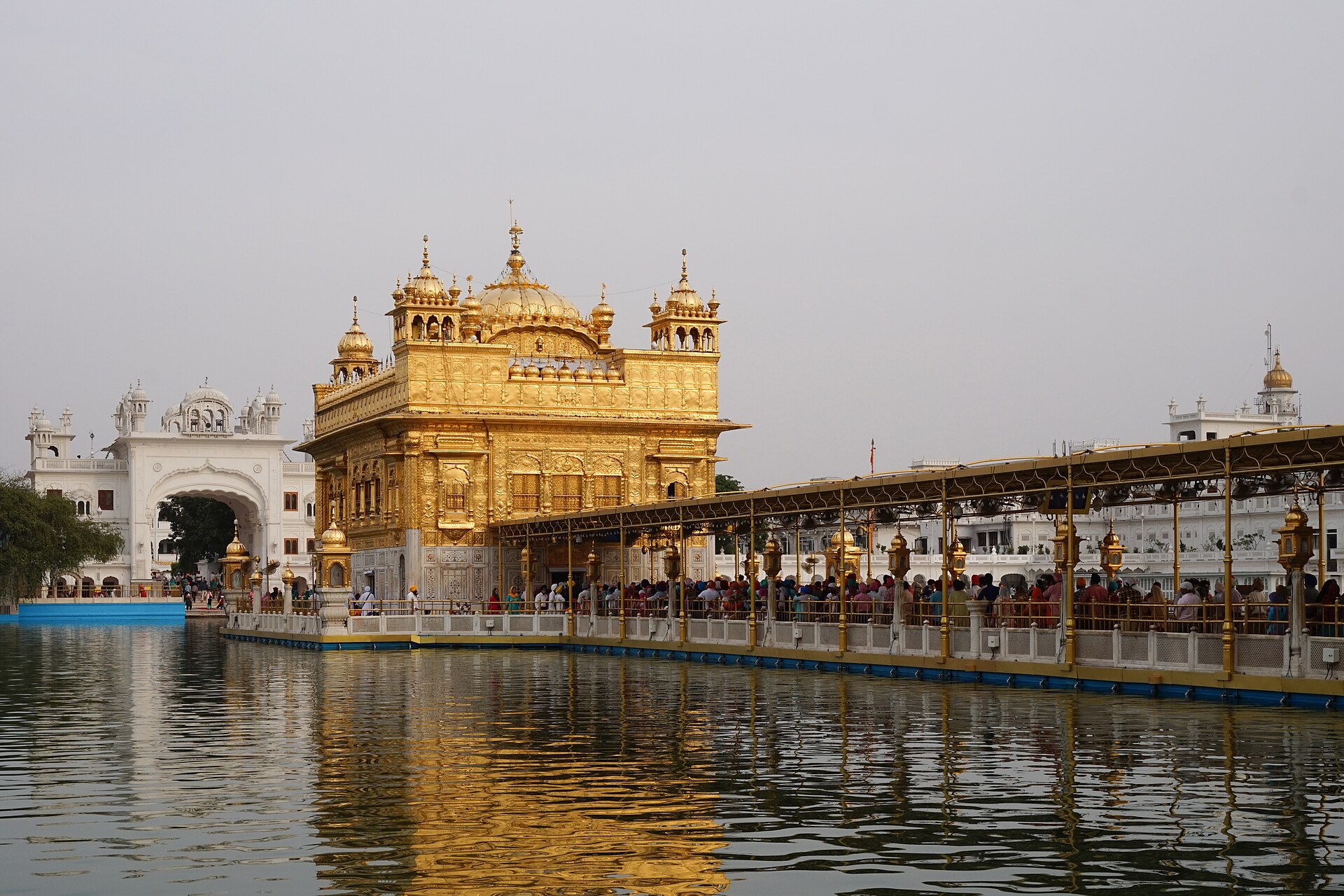
The Sikh position on force is neither pacifist nor permissive and both readings are common outside the tradition. The Zafarnama couplet — when every other means has failed, it is lawful to take up the sword — is the doctrinal anchor, and the concept of dharam yudh sets conditions: no revenge, no plunder, no harm to non-combatants, no forced conversion, and the sword put down when the injustice stops. Bhai Kanhaiya watering the enemy wounded and being blessed for it is the story Sikhs tell to fix the limit. The twentieth century tested it badly: the militancy of the 1980s and 1990s in Punjab, the 1984 army assault on the Golden Temple and the anti-Sikh pogroms that followed the same year, are still argued over in the community in terms of exactly this doctrine, and the argument is not settled. Any account that presents Sikhism as simply martial or simply peaceable is describing one wing of a live dispute.
When all other means have been exhausted, it is lawful to take up the sword.
Guru Gobind Singh, Zafarnama (rendered)The condition, and the whole of it.
The same ground, other faiths
claims that share this one's ideasSign in to open the first thread. Everything here is attributed.