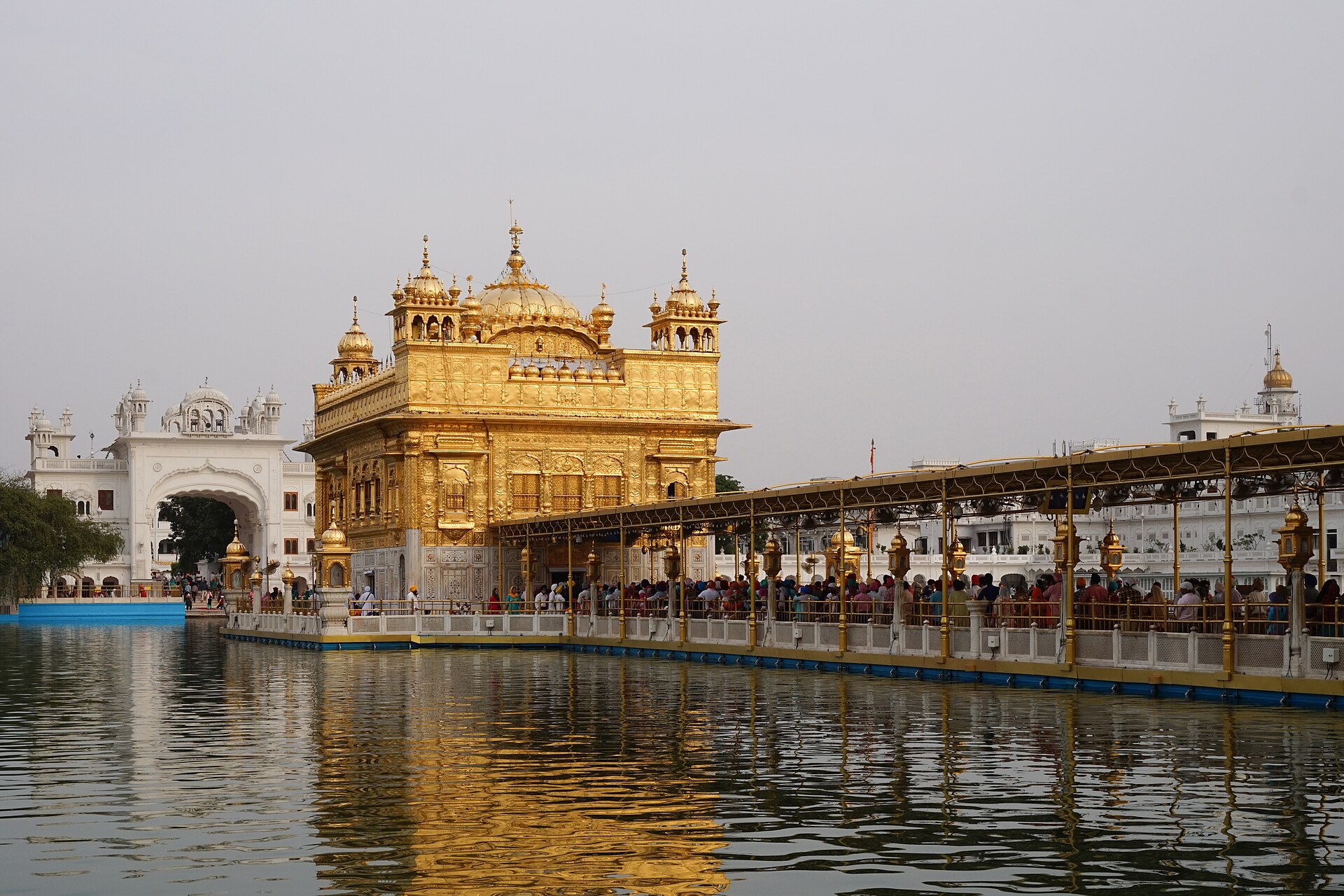
The Guru's door is open; the Khalsa's door has a threshold.
Anyone may walk into a gurdwara, eat in the langar and sit through kirtan without converting, declaring anything, or being asked their religion. Amrit is a separate act with a written discipline attached, and most Sikhs alive have not taken it.
Sikhi has no conversion ceremony for entry into the sangat because there is nothing to enter — a gurdwara is open, langar is served to anyone, and no one is asked what they believe at the door. Amrit is different: it is a vow with a written rehat attached, and taking it makes a person amritdhari, subject to the discipline and to the sanction of the Panj Piare. Estimates of how many Sikhs are amritdhari vary widely and are not reliably counted, but every serious estimate puts them in a minority; keshdhari Sikhs who keep the hair without taking amrit are far more numerous, and sahajdhari Sikhs who do not keep it are numerous again. The Panth has never fully decided whether the Khalsa is the whole point of Sikhi or its committed core, and the legal fight over who may vote for the SGPC is that theological question dressed as an election dispute.
The same ground, other faiths
claims that share this one's ideasSign in to open the first thread. Everything here is attributed.