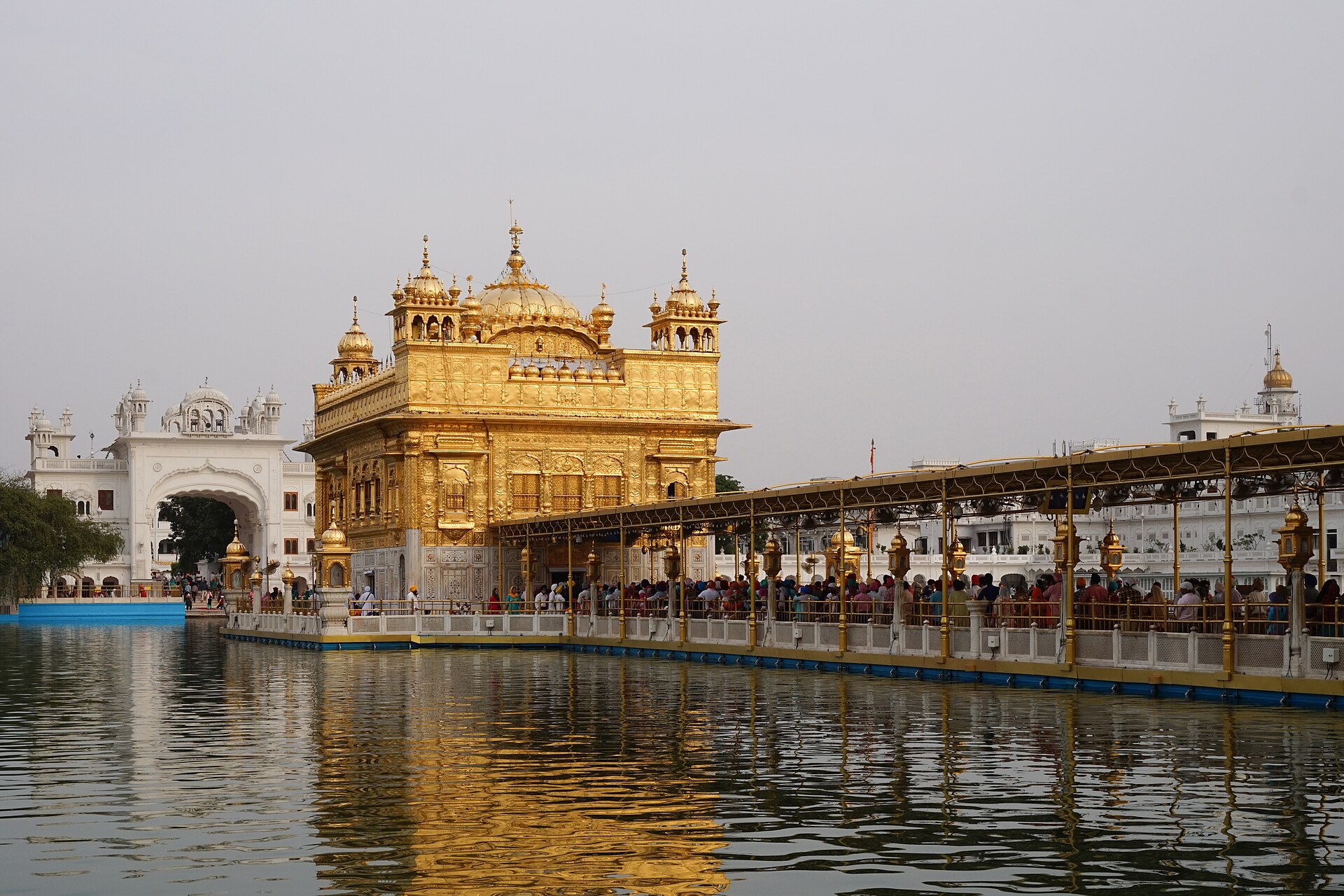
The five khands.
Japji closes by mapping five realms the mind passes through: duty, knowledge, effort, grace, and truth. Nanak describes the first four and then says that describing the fifth is like chewing steel, which is the only honest thing to do with it.
The five khands close Japji and are the nearest thing Sikhism has to a map of the path: dharam khand, the realm of duty and moral action; gian khand, the realm of knowledge, where the sheer scale of creation opens; saram khand, the realm of effort or refinement, where the mind and the understanding are reshaped; karam khand, the realm of grace, inhabited by the spiritually powerful; and sach khand, the realm of truth, where the formless One dwells. Nanak describes the first four in increasing detail and then, arriving at the fifth, says that speaking of it is as hard as chewing steel and stops. Sikh commentators have argued for centuries about whether saram means effort or shame or beauty. The structure matters more than the details: the map is offered and then explicitly declared incomplete at the point where it would count most, which is consistent with everything else the composition does.
The same ground, other faiths
claims that share this one's ideasSign in to open the first thread. Everything here is attributed.