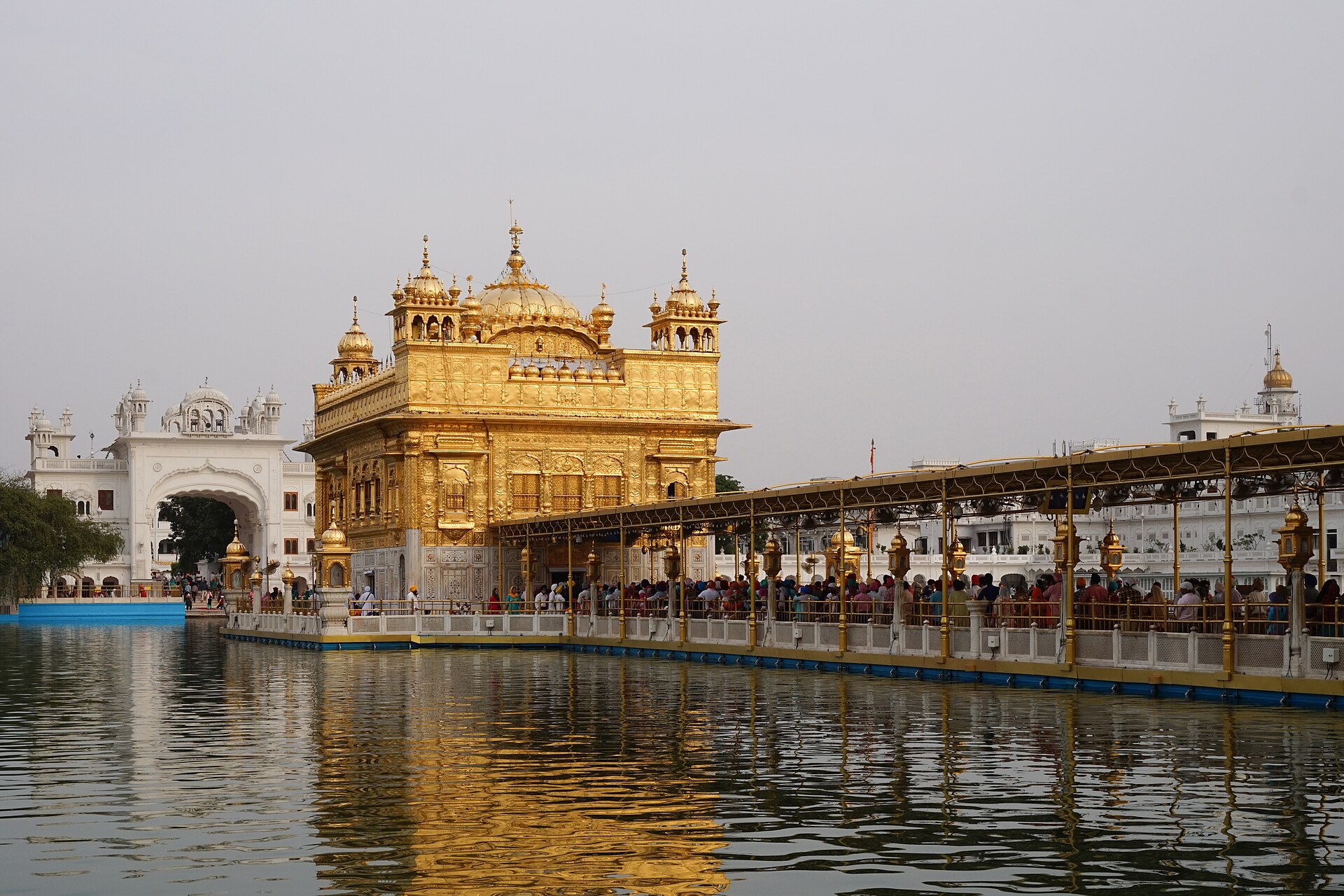
Harmandir Sahib, Amritsar · Bernard Gagnon · CC BY-SA 4.0

Sikhism

Tradition·Founded 1499 CE·est. ~26 million worldwide

Sikhism → 1 branch

Branch
Precept of Sikhism

The Five Ks.

Uncut hair, comb, steel bracelet, soldier's shorts, sword — identity worn on the body.

What it asksWear the five: uncut hair, comb, steel bracelet, undergarment, and sword
Who it bindsThe initiated Khalsa — not every Sikh takes amrit
Where it bitesThe kirpan in airports, schools, and courtrooms is where a 1699 discipline meets modern security law
Understanding it — context, not catechism: how this passage is held

The Five Ks were given at the Khalsa's founding in 1699 as a uniform: unshorn hair (kesh), a comb (kangha), a steel bracelet (kara), a cotton undergarment (kachera), and a sword (kirpan). The point was visibility — a persecuted community that could not blend in would have to defend itself and each other. The kirpan is the one that keeps meeting modern law, and courts in Canada, Britain, and India have generally accommodated it as a religious article rather than a weapon.

From the sources — the passages this rests on; concise renderings, cited

When all other means have failed, it is righteous to draw the sword.

Zafarnama of Guru Gobind Singh (rendered)

The condition attached to the kirpan by the Guru who gave it.

The same ground, other faiths

claims that share this one's ideas
Ritual sustains the order of the world. Vedic Religion · core tenet Go deeper →
Vesak. Buddhism · rite Go deeper →
Paryushana. Jainism · rite Go deeper →
The commandments are how the covenant is lived. Judaism · core tenet Go deeper →
The Eucharist. Christianity · rite Go deeper →

The conversation

argument stays attached to the claim it is about All discussion →

Sign in to open the first thread. Everything here is attributed.

Built on Hatchable