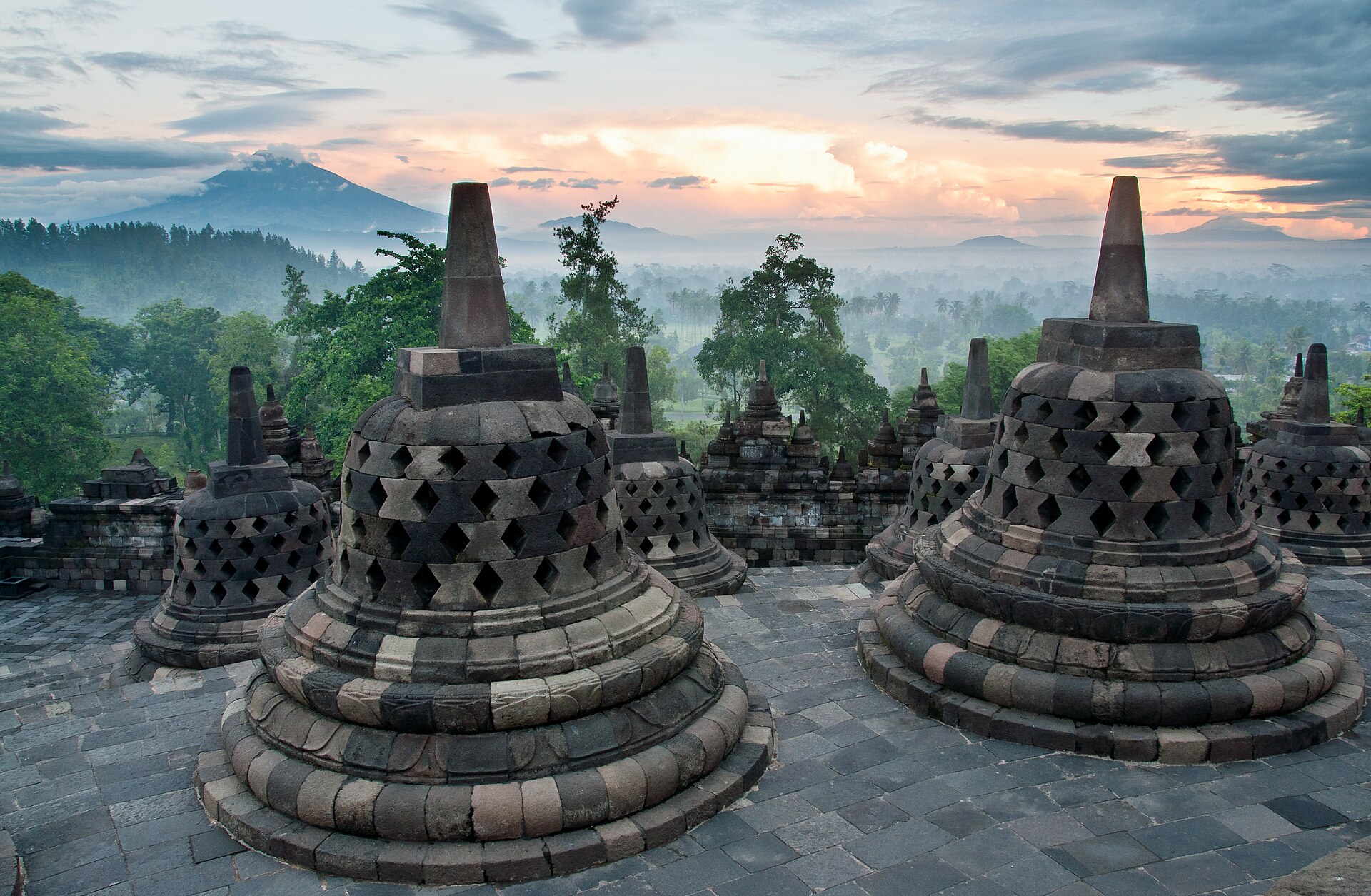
Borobudur at sunrise · Justine Hong · CC BY 2.0

Buddhism

Tradition·Founded c. 480 BCE·est. ~500 million worldwide

Vedic Religion → Buddhism → 3 branches

Branch
Rite of Buddhism

Mantra and mala.

Om mani padme hum, told round 108 beads on a road, on a bus, in a queue. The practice that fits into a life without asking it to stop.

⏱ continuously — on the road, at work, on retreat◌ anyone with a string of beads
What happensOm mani padme hum, or another mantra, told round a mala of 108 beads
What it needsA mala; a mantra received from a teacher for the tantric ones
What it aims atThe mind occupied and steadied; blessing accumulated; in tantra, identification with the figure invoked
Understanding it — context, not catechism: how this rite is held

Om mani padme hum belongs to Avalokiteshvara and is the most-recited sequence of syllables in human history by a wide margin. Its literal reading is contested — "the jewel in the lotus" is the usual gloss, and Tibetan teachers generally decline to make the meaning do any work, since the practice is not about understanding it. The mala has 108 beads and a marker bead you do not cross, so counting reverses at each round. In the Tibetan world the mantra is also inscribed on stones, printed on flags for the wind to say, and rolled into wheels: the practice is designed to be delegated to the environment when the practitioner has to do something else.

The same ground, other faiths

rites that share this one's ideas
T The yakshis. Jainism · figure Meet them →
T The Shechinah — the presence that went into exile. Judaism · figure Meet them →
K Khadija — who believed first. Islam · figure Meet them →
Remember the Name. Sikhism · core tenet Go deeper →

The conversation

argument stays attached to the rite it is about All discussion →

Sign in to open the first thread. Everything here is attributed.

Built on Hatchable