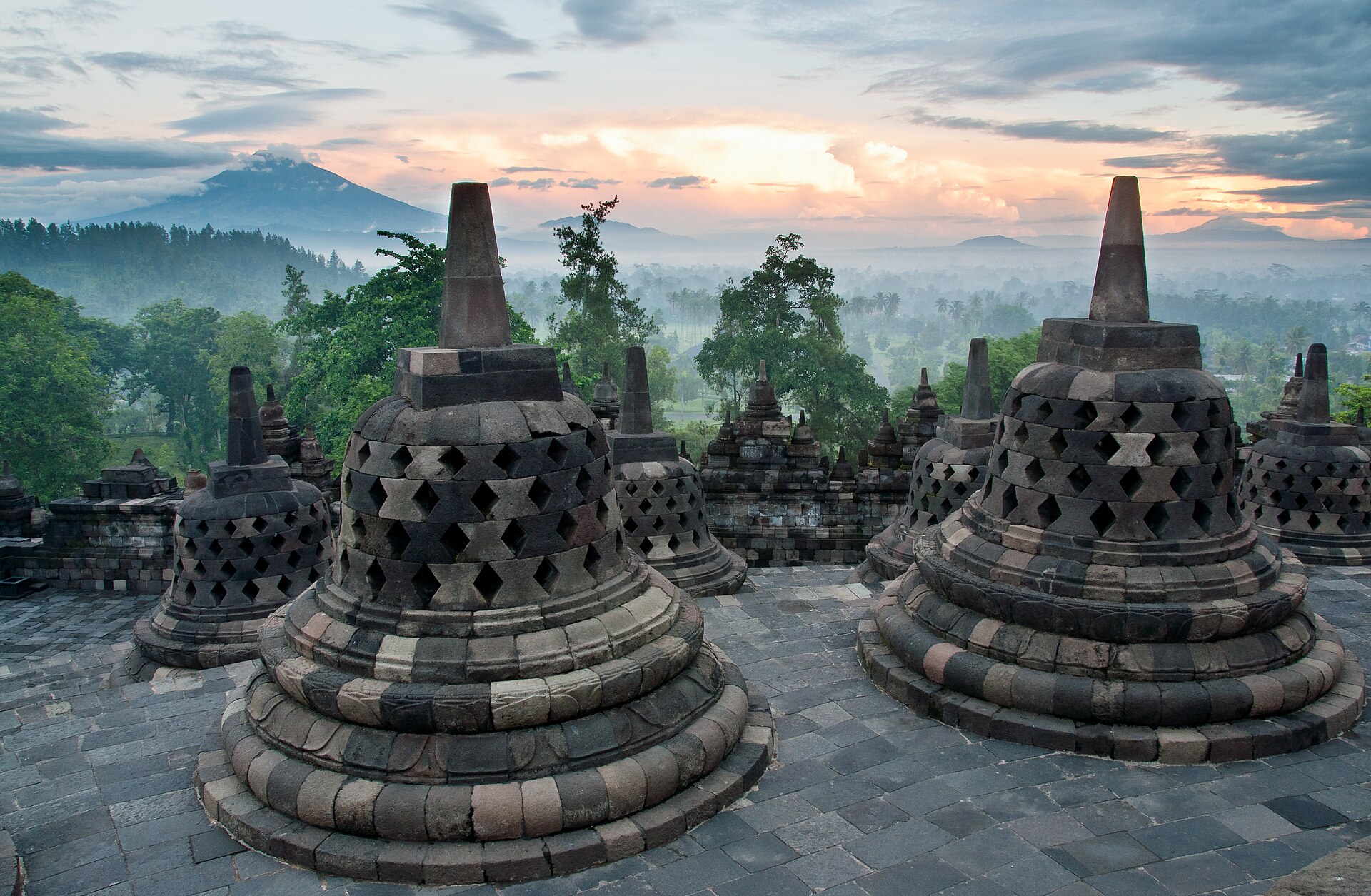
Borobudur at sunrise · Justine Hong · CC BY 2.0

Buddhism

Tradition·Founded c. 480 BCE·est. ~500 million worldwide

Vedic Religion → Buddhism → 3 branches

Branch
Rite of Buddhism

Obon — feeding the hungry ghosts.

The seventh month opens and the dead come home: graves swept, food laid out, paper money burned, and lanterns floated downriver at the end to send them back.

⏱ annual — the seventh lunar month◌ the whole family, living and otherwise
What happensGraves swept, food set out, paper goods burned, lanterns floated to send the dead back at the end
What it needsAncestors, and a household willing to feed them
What it aims atThe hungry ghosts fed and the ancestors honoured — Buddhism absorbing the Chinese family whole
Understanding it — context, not catechism: how this rite is held

Obon in Japan, Ullambana in China, Pchum Ben in Cambodia: the seventh lunar month opens the gates and the dead come home for a visit. The origin story is Moggallana finding his mother reborn as a hungry ghost, unable to eat, and being told by the Buddha that only the collective merit of the sangha could reach her — which is how a religion of individual liberation acquired an ancestor festival. Families sweep graves, lay out food, burn paper money and goods, and float lanterns downriver at the close to see the dead off. In practice it is the point where Buddhism and Chinese family religion became a single thing.

The same ground, other faiths

rites that share this one's ideas
The samskaras — life, marked. Hinduism Go deeper →
Water thrown the wrong way. Sikhism · story Read it in full →
T The Stove God. Taoism · figure Meet them →
Ancestor veneration. Confucianism Go deeper →
Muktad — the dead come home. Zoroastrianism Go deeper →

The conversation

argument stays attached to the rite it is about All discussion →

Sign in to open the first thread. Everything here is attributed.

Built on Hatchable