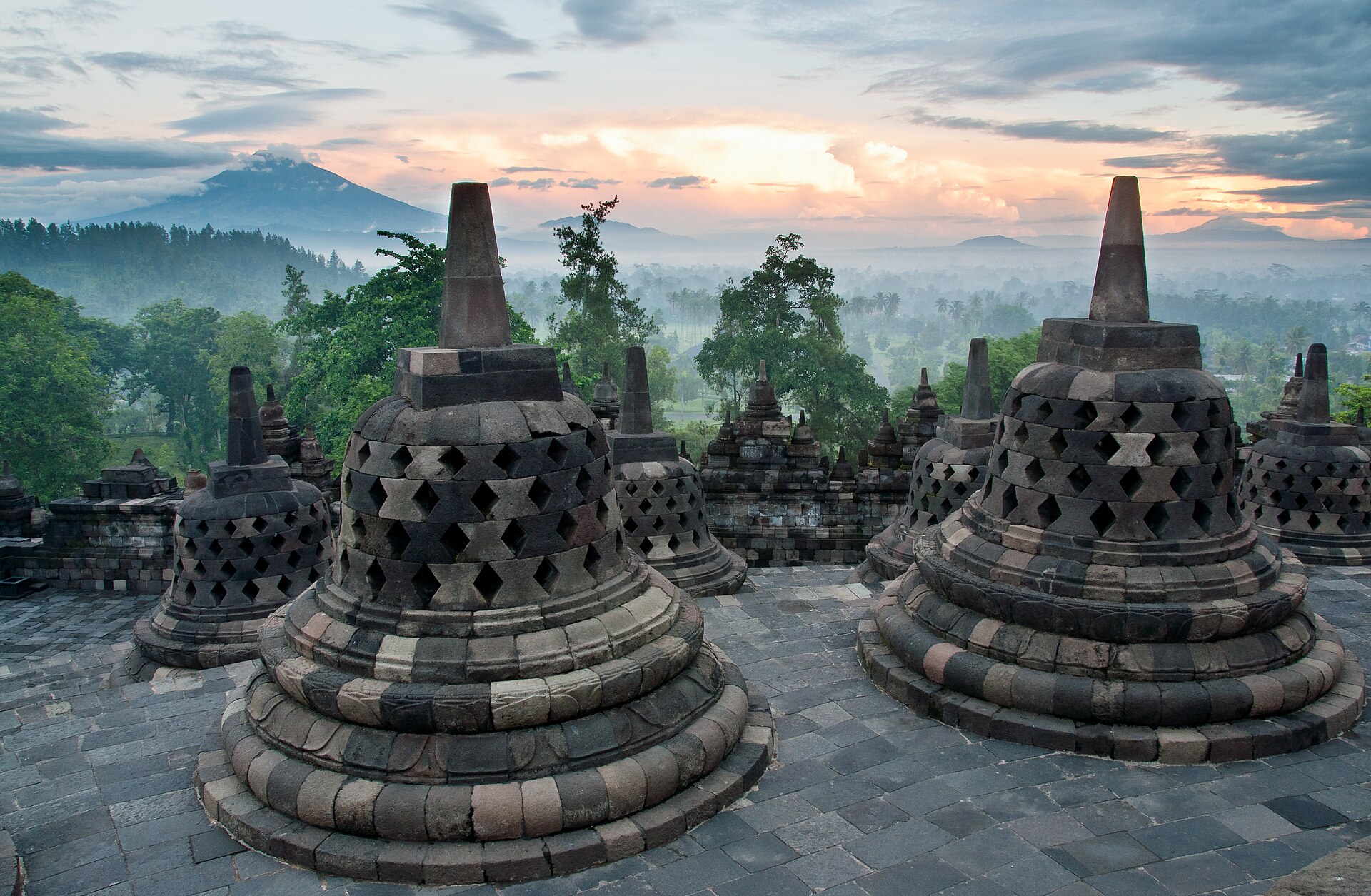
Borobudur at sunrise · Justine Hong · CC BY 2.0

Buddhism

Tradition·Founded c. 480 BCE·est. ~500 million worldwide

Vedic Religion → Buddhism → 3 branches

Branch
The Interior of Buddhism

Kensho — seeing your nature.

The sudden Zen opening: brief, unmistakable, and by the tradition's own account routinely overrated by the person it happens to. It starts the training rather than finishing it.

Reached throughZen practice, koan work — and often, by report, an accident
What it is likeAbrupt, brief, and unmistakable; laughter or tears as often as calm
What it signifiesA glimpse of one's own nature — the beginning of practice, the tradition insists, not the end of it
Understanding it — context, not catechism: how this passage is held

Kensho, or satori, is the sudden seeing that Zen is famous for, and the tradition's attitude toward it is more sceptical than the reputation suggests. Teachers describe it as real, brief, and dangerously flattering: the classical warning is that a person who has had one glimpse and stops there has acquired a spiritual identity rather than lost one, and the ox-herding pictures put the opening at stage three of ten, with the last frame showing the practitioner back in the marketplace with nothing to show. Koan work is designed to exhaust the discursive mind into it, and formal koan curricula in Rinzai run for years after the first breakthrough, not before it.

The same ground, other faiths

claims that share this one's ideas
R Rajneesh — the master as a device. The Rajneesh Movement (Osho) · figure Meet them →
Sound rightly spoken has power. Vedic Religion · core tenet Go deeper →
Samadhi — union in stillness. Hinduism Go deeper →
K Kundakunda. Jainism · figure Meet them →
God contracted to make room for the world. Judaism · core tenet Go deeper →
The presence — assurance to fire. Christianity Go deeper →

The conversation

argument stays attached to the claim it is about All discussion →

Sign in to open the first thread. Everything here is attributed.

Built on Hatchable