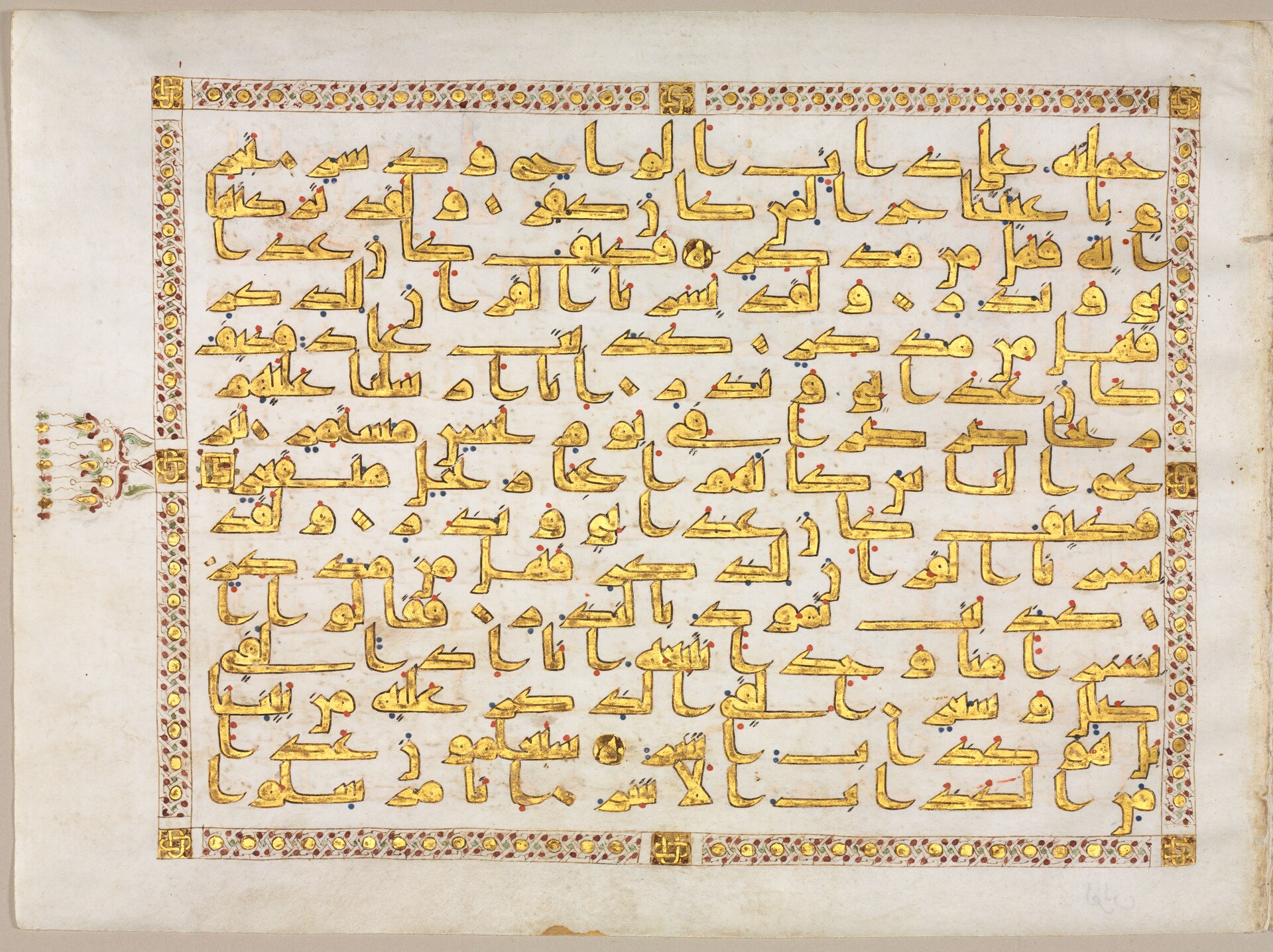
Maryam and the palm tree.
She gives birth alone, in pain, wishing she were dead and forgotten, and is told to shake the trunk of the palm for fresh dates and to drink and be comforted. Then she is told to answer the town's accusation with a vow of silence. She is the only woman named in the Quran, and a sura carries her name.
Sura 19 is named for Maryam, the only woman named in the Quran, and the birth scene is unusually raw. She withdraws to a remote place, the pains drive her to the trunk of a palm, and she says she wishes she had died before this and been a thing forgotten. A voice tells her not to grieve, that a stream has been set below her, and to shake the trunk toward her so fresh dates fall — she is told to do something physical for herself in the middle of it. Then she is instructed to vow silence and to say nothing to anyone, and when the town confronts her with the child she points at him and he speaks in her defence. Muslim devotion holds Maryam in extremely high regard: she is described as chosen above the women of the worlds, sura 3 recounts her childhood in the temple, and the Quran's account of the annunciation and virgin birth is affirmed without the incarnation Christianity draws from it. Date palms and the practice of eating dates at childbirth trace to this passage in popular practice.
The pains of childbirth drove her to the trunk of a palm tree. She said, would that I had died before this and been a thing forgotten.
Quran 19:23 (rendered)She is then told to shake the trunk for fresh dates, and to drink and be comforted.
The same ground, other faiths
claims that share this one's ideasSign in to open the first thread. Everything here is attributed.