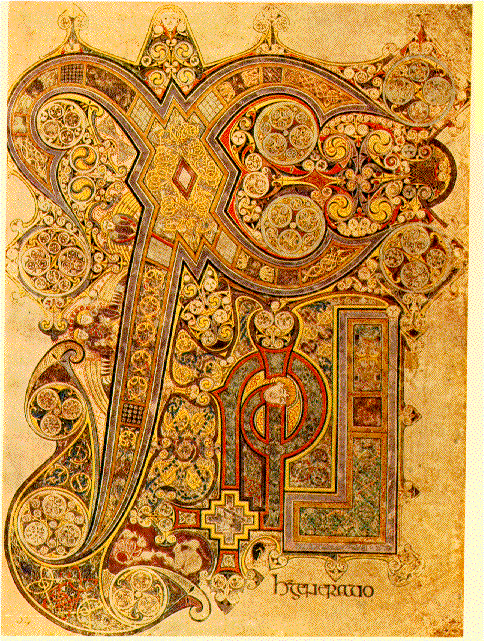
God became human, died under empire, and did not stay dead.
Faith in Jesus of Nazareth as the incarnation of God: crucified, risen, and returning. What began as a sect within Judaism became, within four centuries, the faith of the empire that executed its founder — today the largest religion on earth.
DeitiesOne God in three persons — the Trinity
Founded30 CE · Roman Judea
FounderJesus of Nazareth and his apostles
AfterlifeResurrection and judgment; life everlasting
TextsBible — Old and New Testaments
The map
Christianity’s corner of it — solid lines are descent; dotted lines are resemblance only, ideas held in common across unrelated faiths. Click a node to recenter; ✕ returns here. All 171 faiths →
c. 1000 BCE Judaism 30 CE Christianity 431 CE The Church of the East 451 CE Oriental Orthodoxy 1054 CE Eastern Orthodoxy 1843 CE The Taiping Heavenly Kingdom
Creation is good, and it was made out of nothing.
God made matter and pronounced it good six times before pronouncing it very good. The claim was aimed squarely at the Gnostics, who held the physical world to be the botched work of a lesser god, and it is why Christianity never produced a doctrine that the body is a prison.
Go deeper — context →
God is one being in three persons.
Father, Son, and Spirit — the Trinity is the grammar of Christian speech about God.
held by most
Go deeper — context & 1 source →
Something in us is bent at the root.
Not that people do wrong, but that they arrive already wanting to. Augustine called it original sin and read it as inherited guilt; the Greek East calls it ancestral sin and inherits mortality without the guilt. Same story, two very different bills.
held by most
Go deeper — context →
In Jesus, God became human.
The incarnation: fully God and fully man, born under an empire and executed by it.
Go deeper — context & 1 source →
The cross did something — and no council ever said what.
Ransom paid to death, a debt settled to God's honour, the penalty borne in our place, the powers publicly defeated, love demonstrated past argument. Christianity defined the Trinity at Nicaea and the two natures at Chalcedon, and left the meaning of the crucifixion undefined for two thousand years.
⚖ contested within
Go deeper — context & 1 source →
The resurrection defeated death.
The tomb was empty — the claim on which Paul stakes the entire faith.
Go deeper — context & 1 source →
Scripture is God-breathed.
Every branch says the words; none agrees on the mechanics. The Chicago Statement of 1978 made inerrancy on every subject a Protestant boundary marker. Vatican II limited the guarantee to what God wanted put down for the sake of our salvation. The Orthodox read the text only inside the Fathers and the liturgy, and find the question oddly framed.
held by most
Go deeper — context →
Salvation is grace, not wage.
Rescue is received, not earned — how faith and works relate is exactly where the branches divide.
⚖ contested within
Go deeper — context & 1 source →
One person, two natures — or one nature out of two.
Chalcedon, 451: Christ is made known in two natures, without confusion and without division. The Copts, Armenians, Ethiopians and Syriacs refused the wording and have been a separate communion ever since — the oldest surviving split in Christianity, and by the joint statements signed at Chambesy in 1989 and 1990, largely a fight over one Greek noun.
⚖ contested within
Go deeper — context & 1 source →
Love of God and neighbor is the whole law.
The double commandment — the ethic every branch, whatever else it disputes, shares.
Go deeper — context & 1 source →
The Spirit proceeds from the Father — and, says the West, the Son.
One Latin word, filioque, added to a Greek creed. Spain put it in at Toledo in 589, Rome was singing it by 1014, and Constantinople has never accepted it. Formally it is a question about the inner life of God. Practically it was about who is allowed to edit the creed.
⚖ contested within
Go deeper — context →
The church is the body of Christ.
Not a metaphor of membership but of anatomy: many parts, one body, no part able to say to another I have no need of you. The community is the continued incarnation.
Go deeper — context & 1 source →
The bread is the body.
Rome says the substance changes and the appearances do not. Orthodoxy says it changes and declines to explain the mechanism. Luther said Christ is in, with and under the bread; Zwingli said the meal remembers him. No other Christian sentence has got more people killed.
⚖ contested within
Go deeper — context →
Christ will come again.
The creed's unfinished clause: history has a direction and a judge, and the same figure who came in weakness returns in glory. Every liturgy leans toward it — come, Lord.
Go deeper — context & 1 source →
Mary is the God-bearer.
Theotokos was settled at Ephesus in 431, and it is a claim about her son rather than about her. What came after is not settled: the perpetual virginity, which Luther and Calvin both kept; the Immaculate Conception, defined by Rome alone in 1854; the Assumption, defined in 1950 and rejected by the Orthodox, who keep the feast anyway.
⚖ contested within
Go deeper — context →
The dead are not out of reach.
Catholics and Orthodox ask the saints to pray for them and pray for their own dead by name at every liturgy. Purgatory is the Latin account of why the second one helps; the East prays for the dead just as hard and refuses the Latin machinery. The Reformers cut both, and the argument has never closed.
⚖ contested within
Go deeper — context →
The body rises. Not the soul only.
The creed says resurrection of the body and it means the body. That is why Christians buried rather than burned for most of their history, why the catacombs exist, and why the Orthodox still resist cremation — Rome permitted it in 1963, with conditions about where the ashes may end up.
Go deeper — context →
There is a judgment, and something is at stake in it.
Eternal conscious punishment is the historic majority position. Annihilationists hold that the lost simply cease. Universalists hold that everyone is finally restored, a reading Gregory of Nyssa held openly and a version of which was condemned in 553. The question is louder now than it has been in centuries.
⚖ contested within
Go deeper — context & 1 source →
The image is permitted — and the church fought a civil war to decide it.
Byzantium smashed its own icons from 726 and again from 815 before the Second Council of Nicaea and then the year 843 settled it: the incarnation makes God depictable, and the honour paid to the image passes to the one depicted, not to the wood. Rome agreed. Calvin did not, and Reformed churches still whitewash their walls.
⚖ contested within
Go deeper — context & 1 source →
God is met, not comprehended.
The apophatic instinct runs through the whole tradition: what God is not can be said; what God is cannot. Gregory Palamas gave the East its formula in the 1340s — the divine essence stays unreachable, the divine energies are fully God and are genuinely encountered. The Latin West took the other road and reasoned by analogy.
held by most
Go deeper — context →
The kingdom has arrived and has not arrived.
Jesus announced it as present and then taught his followers to pray for its coming. Every Christian ethic since has lived in that gap: the world is already claimed, and visibly is not yet what it was claimed for.
Go deeper — context →
T
The Holy Spirit — the person without a face.
Fully God and structurally hard to picture, which is why the Spirit gets a bird. The creed of 381 had to add a clause insisting on the divinity, because the argument was still running. The last hundred years have belonged to the Spirit: Pentecostal and charismatic Christianity went from nothing to more than half a billion people.
Meet them — context →
G
God — Father, Son, and Holy Spirit.
One God in three persons: the Father who creates, the Son who redeems, the Spirit who sustains — relationship inside the divine life itself.
Meet them — context & 1 source →
J
John the Forerunner.
Ate locusts, wore hair, told a king what he thought of his marriage, and lost his head for it. The East gives him the honour it gives nobody else but Mary, and he stands to Christ's left on every iconostasis in the world.
Meet them — context →
T
The angels.
Messengers and ministers — Gabriel announces, Michael contends; created spirits in service, never to be worshipped.
Meet them — context →
Sunday.
The first day of the week, kept because that is the day the tomb was found empty. Everything else in the practice hangs off it — the calendar, the working week of most of the planet, and the one hour a large minority of humanity still gives to something it cannot prove.
Go deeper — context & 1 source →
The Eucharist.
Bread and wine taken as Christ commanded at his last meal — the branches dispute what it is, none dispute doing it.
Go deeper — context →
The Divine Liturgy.
Two hours or more, sung end to end, with no instruments in the Byzantine rite because the human voice is held to be the only fit one. The people stand. The Ethiopian rite adds drums, sistra and prayer staves, and the deacons dance the aquaquam.
held by most
Go deeper — context →
Baptism.
Water and the triune name — death of the old life, birth of the new. The one initiation nearly every branch keeps.
Go deeper — context →
Where next
the museum exit — every door leads deeper inSources
48 cited texts
- Matthew 28:19 where it is cited →
- John 1:14 cited 2× →
- 2 Corinthians 5:19 where it is cited →
- 1 Corinthians 15:14 where it is cited →
- Ephesians 2:8–9 where it is cited →
- Definition of Chalcedon, 451 (rendered) where it is cited →
- Matthew 22:37–40, condensed where it is cited →
- 1 Corinthians 12:21 where it is cited →
- Revelation 22:20 where it is cited →
- Julian of Norwich, Revelations of Divine Love, c. 1373 (rendered) where it is cited →
- Second Council of Nicaea, 787, quoting Basil the Great (rendered) where it is cited →
- Pliny the Younger, Letters 10.96, to the Emperor Trajan, c. 112 CE (Melmoth translation) where it is cited →
- 1 Corinthians 15:17 where it is cited →
- Matthew 6:11–12 where it is cited →
- Psalm 119:164 (KJV) where it is cited →
- Summary of Ethiopian Orthodox Tewahedo fasting practice (rendered) where it is cited →
- Second Council of Nicaea, 787, citing Basil the Great (rendered) where it is cited →
- Exodus 3:7 where it is cited →
- Job 38:4 where it is cited →
- Luke 15:20 where it is cited →
- Luke 10:36–37 where it is cited →
- John 13:15 where it is cited →
- Acts 2:8 where it is cited →
- Acts 8:36 where it is cited →
- Matthew 22:37–39 (KJV) where it is cited →
- Matthew 5:44 where it is cited →
- Matthew 25:35 (KJV) where it is cited →
- Matthew 5:9 where it is cited →
- Matthew 18:22 where it is cited →
- Matthew 5:37 (KJV) where it is cited →
- Matthew 5:39 (KJV) where it is cited →
- The Nicene Creed (325, rendered) where it is cited →
- Psalm 13:1 where it is cited →
- William Tyndale, reported by John Foxe (rendered) where it is cited →
- Athanasius, Thirty-Ninth Festal Letter, Easter 367 (rendered) where it is cited →
- The Jesus Prayer, as given throughout the Philokalia where it is cited →
- 2 Corinthians 13:14 where it is cited →
- John 20:17 where it is cited →
- Matthew 19:21 where it is cited →
- Mark 8:29 where it is cited →
- Augustine, Confessions I.1 (rendered) where it is cited →
- Luke 1:38 where it is cited →
- Luke 1:46–52, the Magnificat where it is cited →
- Nican Mopohua, Nahuatl, c. 1550s (rendered) where it is cited →
- Matthew 16:18 where it is cited →
- Galatians 2:20 where it is cited →
- Findings of the Independent Commission on Sexual Abuse in the Church (CIASE), France, October 2021 (rendered) where it is cited →
- Philippians 4:7 (KJV) where it is cited →
These citations identify texts used in the linked passages. Follow each passage to read its quotation and context. A tradition’s own texts explain its teachings; historical claims may also require independent scholarship. Translations marked (rendered) are our own plain-English wording, not a standard edition; where a passage matters, read it in a full translation.