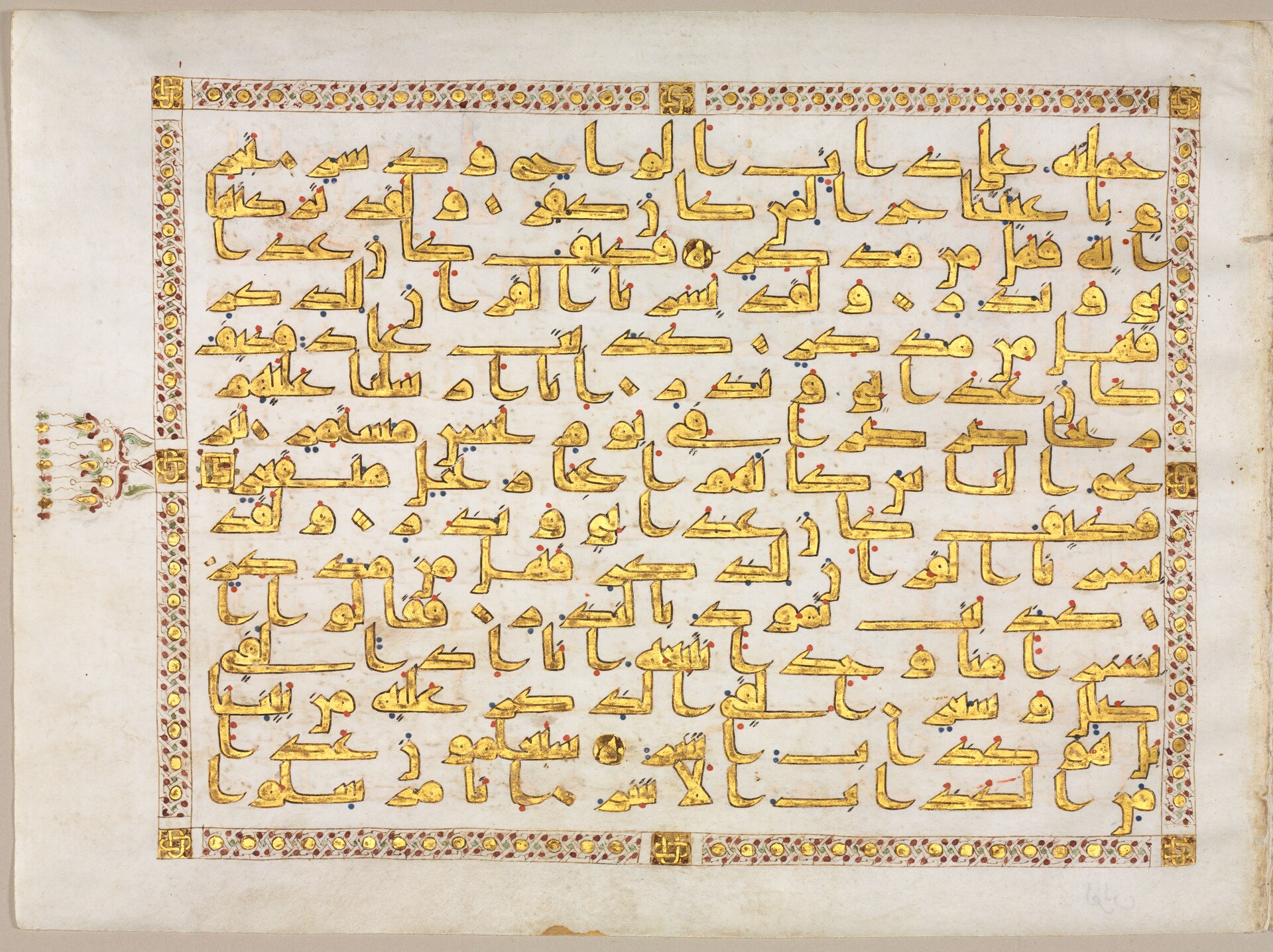
Qur'an folio in gold Kufic, 9th c. · Cleveland Museum of Art · CC0

Islam

Tradition·Founded 610 CE·est. ~2 billion worldwide

Islam → 4 branches

Branch
Precept of Islam

Modesty — of dress and gaze.

Hayâ' covers both: the believer lowers the gaze before the garment is ever discussed. The rules differ by school; the virtue beneath them does not.

What it asksLower the gaze, guard the self, dress without display — the command addresses men first
Who it bindsBoth sexes, though the public argument has centered almost entirely on women
Where it bitesFace covering, hair covering, and coercion vs choice divide scholars, countries, and families
Understanding it — context, not catechism: how this passage is held

The Quranic commands on modesty address men before women, and in both cases begin with the gaze rather than the garment — the sequencing is frequently noted by Muslim scholars against a public discourse fixated on women's clothing. What follows is genuinely contested: schools differ on face covering, on whether the requirements vary by society, and on how the virtue survives when the state either mandates or bans the practice. Coercion in either direction is criticized from within.

From the sources — the passages this rests on; concise renderings, cited

Tell the believing men to lower their gaze and guard themselves; and tell the believing women to do likewise.

Quran 24:30–31

The command addresses men first, and begins with the gaze.

The same ground, other faiths

claims that share this one's ideas
Paritta — the protective chant. Buddhism · rite Go deeper →
The kitchen. Jainism · rite Go deeper →
The binding of Isaac. Judaism · story Read it in full →
Something in us is bent at the root. Christianity · core tenet Go deeper →
Everything runs under hukam. Sikhism · core tenet Go deeper →

The conversation

argument stays attached to the claim it is about All discussion →

Sign in to open the first thread. Everything here is attributed.

Built on Hatchable