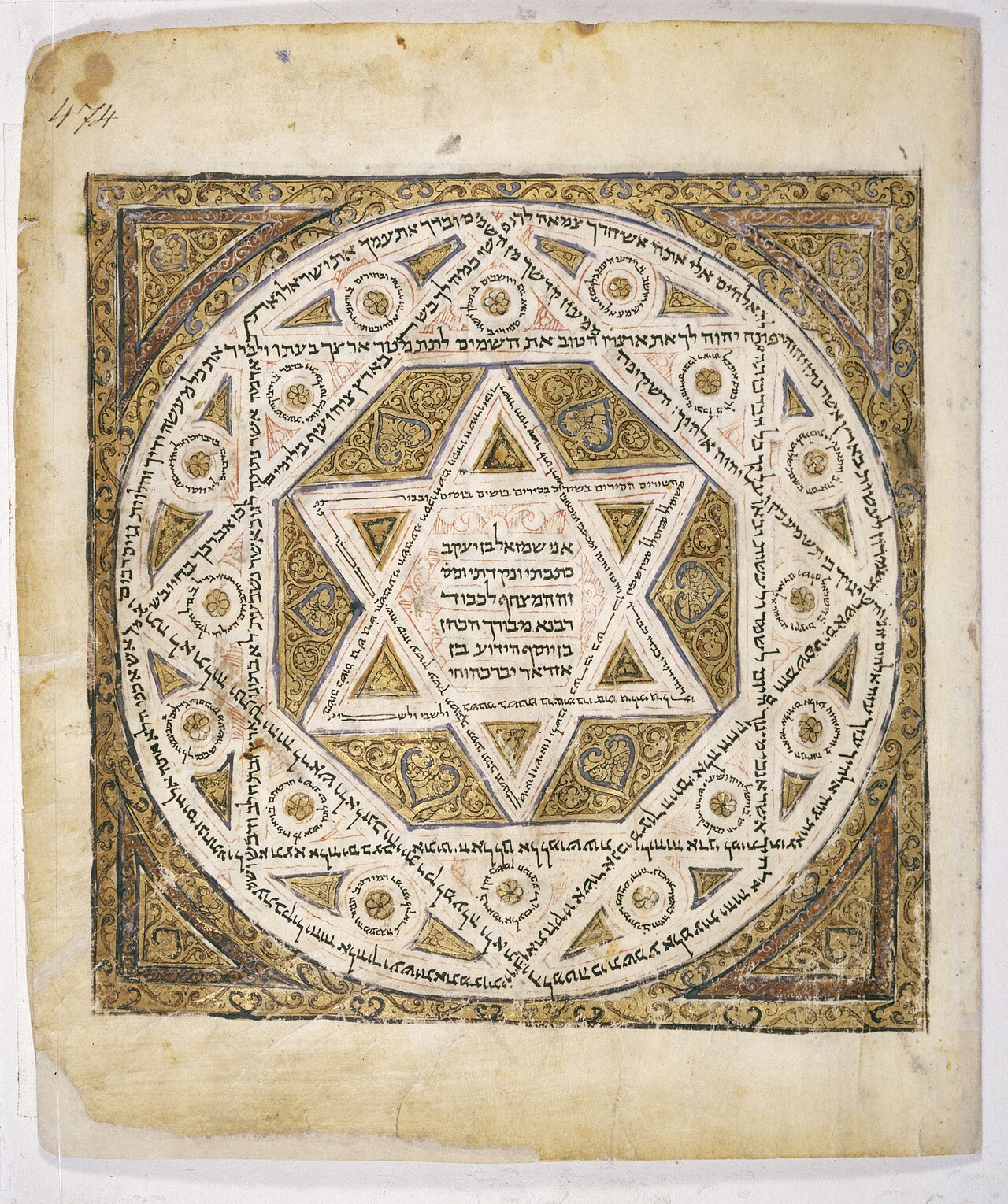
Rosh Chodesh — the new moon.
The custom that women do not work on Rosh Chodesh is old, and is explained as a reward for refusing to give their jewellery to the golden calf. Since the 1970s, Rosh Chodesh groups have become one of the main venues of Jewish women's religious life in every movement.
Rosh Chodesh is a minor festival that has become a significant one. The new month is announced in synagogue on the preceding Shabbat, and on the day itself an abbreviated Hallel is sung and an extra Torah portion is read; kiddush levana, the blessing of the moon, is said outdoors in the first half of the month, looking up. The Jewish calendar is lunar with a solar correction — twelve months of twenty-nine or thirty days, with a whole extra month added seven times in nineteen years, which is why Pesach stays in spring. Before the calendar was fixed by calculation in the fourth century, months began when witnesses testified to the court in Jerusalem that they had seen the new moon, and the second day of festivals still observed in the diaspora is a fossil of the time it took to get the news out. The old custom that women refrain from work on Rosh Chodesh is recorded in the Talmud and explained in midrash as a reward for the women who refused to hand over their jewellery for the golden calf. Since the 1970s, Rosh Chodesh groups have become one of the primary structures of Jewish women's religious life — study, ritual, prayer — across Reform, Conservative, Reconstructionist and, in a quieter form, Orthodox communities.
The same ground, other faiths
rites that share this one's ideasSign in to open the first thread. Everything here is attributed.