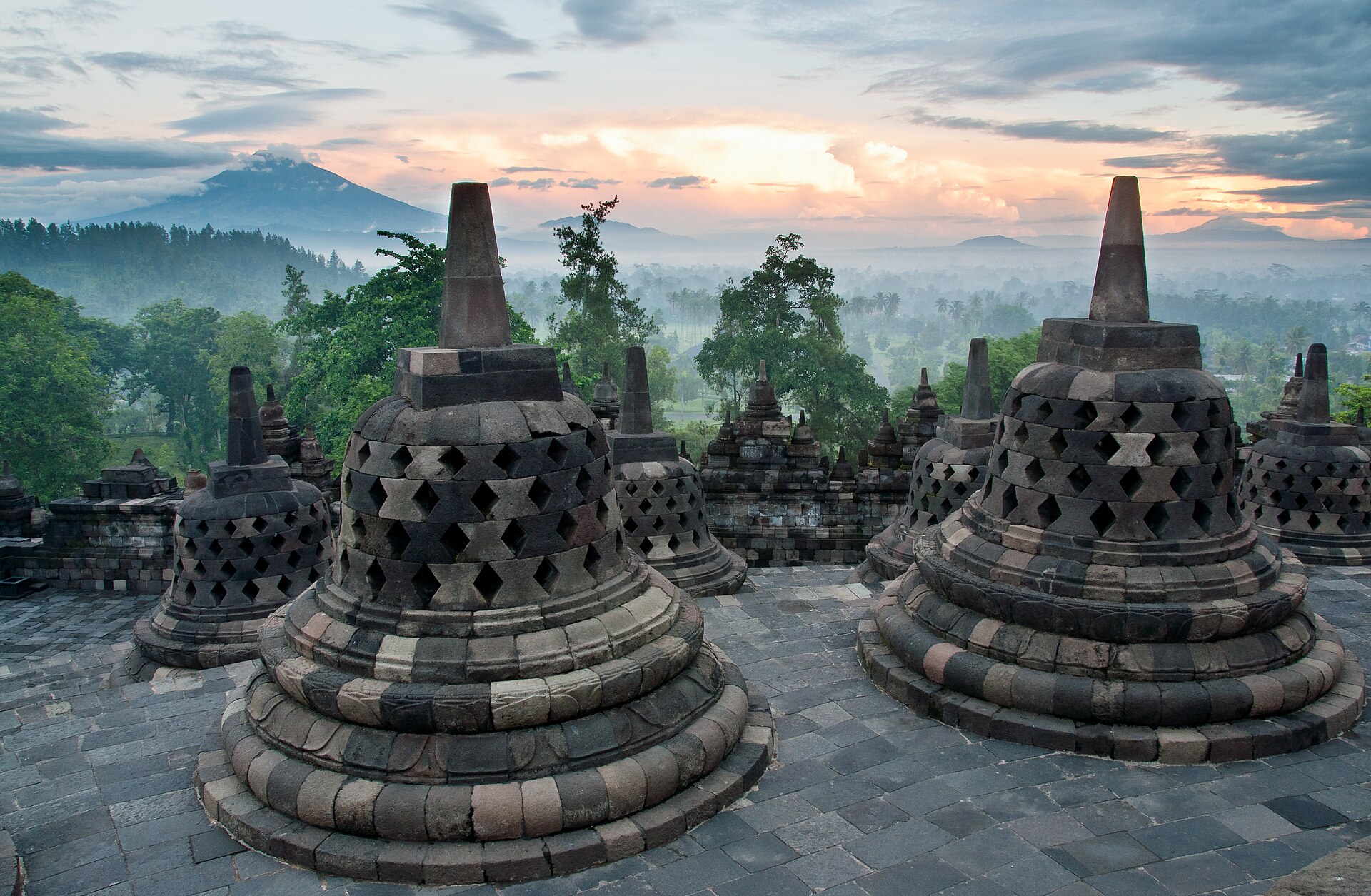
The unit is the temple.
Not a congregation with a service time. A monastery you visit, a village temple that handles the funerals, a city center with a Wednesday sit — you attend rather than belong, and nobody keeps a roll.
Buddhism has no congregation in the Abrahamic sense and no obligatory weekly assembly, which is why census numbers for it are so unreliable. The unit is a place: a monastery you visit to make offerings, a village temple that handles funerals and blessings and stores the community's memory, or, in the West, a rented room with cushions and a Wednesday evening sit. You attend without joining. There is generally no register, no confirmation, and nothing to leave. The exceptions are instructive — Soka Gakkai and some Japanese schools do have formal membership, and they are also the ones that grew fastest in the twentieth century.
The same ground, other faiths
claims that share this one's ideasSign in to open the first thread. Everything here is attributed.