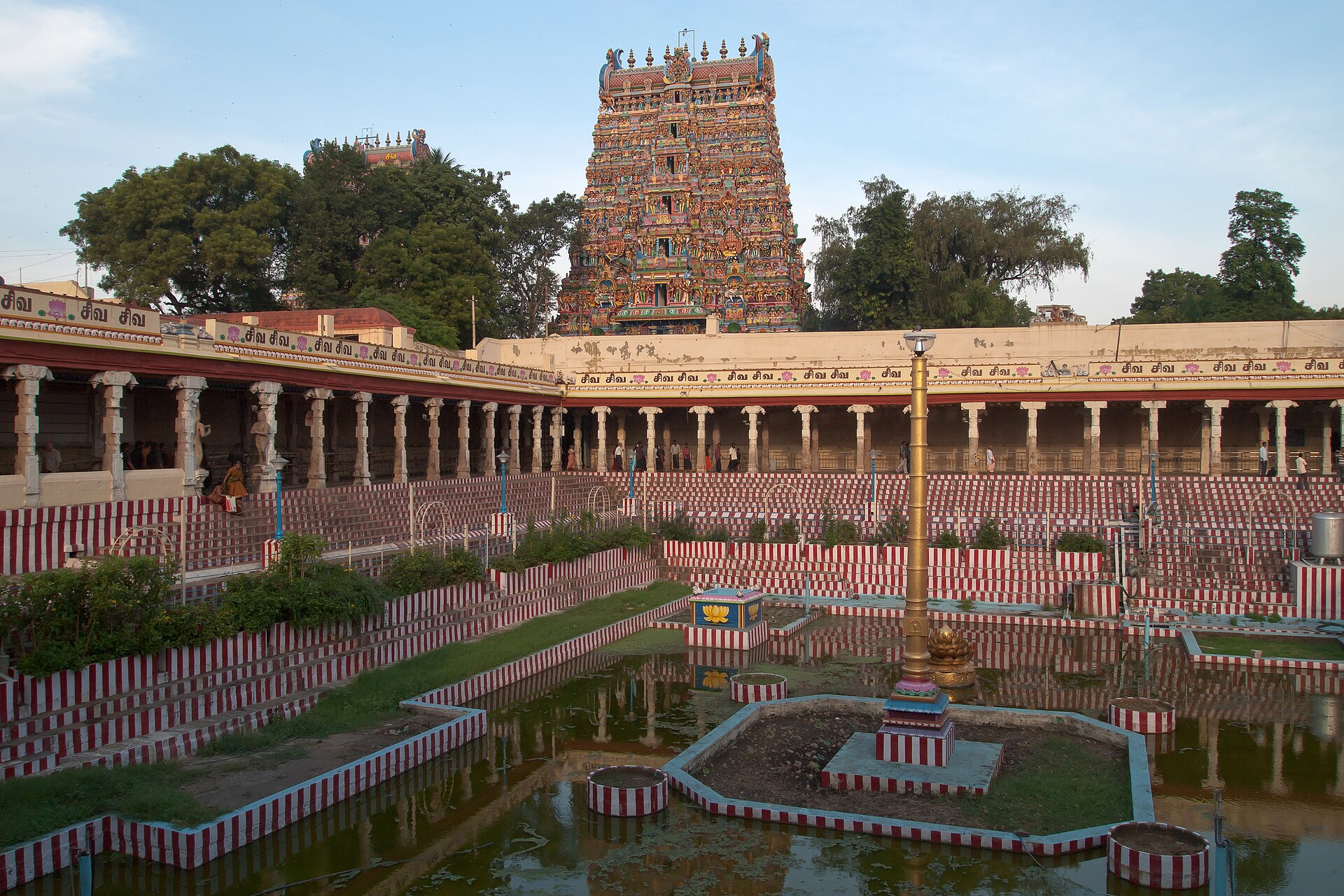
Meenakshi Temple gopuram, Madurai · Vyacheslav Argenberg · CC BY 4.0
ॐ

Hinduism

Tradition·Founding date unrecorded·est. ~1.2 billion worldwide

Vedic Religion → Hinduism → 8 branches

Branch
Scripture of Hinduism

The Vedas & Upanishads.

Hymns for the fire, then questions about the fire — shruti, that which was heard.

LanguageVedic Sanskrit
Composedc. 1500–500 BCE
What it holdsFour Vedas, with the Upanishads as their contemplative conclusion
How it is usedChanted with meter and pitch preserved orally for three millennia
Understanding it — context, not catechism: how this passage is held

The Vedas are called shruti — heard, not composed — and were transmitted orally with astonishing fidelity for a millennium before writing, using recitation patterns that scramble word order deliberately so errors cannot survive. The four collections are ritual manuals; the Upanishads at their end are something else entirely, turning from sacrifice to the question of what the self is, and it is the Upanishads that most Hindu philosophy actually builds on. Almost no Hindu reads the Vedas; nearly every Hindu tradition claims their authority.

From the sources — the passages this rests on; concise renderings, cited

From the unreal lead me to the real; from darkness lead me to light; from death lead me to immortality.

Brihadaranyaka Upanishad 1.3.28

The prayer at the turn from ritual to inquiry.

The same ground, other faiths

claims that share this one's ideas
The Rigveda. Vedic Religion Open the book →
The Pali Canon. Buddhism Open the book →
The Agamas. Jainism Open the book →
Argument, for the sake of heaven, is sacred. Judaism · core tenet Go deeper →
The Bible. Christianity Open the book →
The Quran is the speech of God. Islam · core tenet Go deeper →

The conversation

argument stays attached to the claim it is about All discussion →

Sign in to open the first thread. Everything here is attributed.

Built on Hatchable