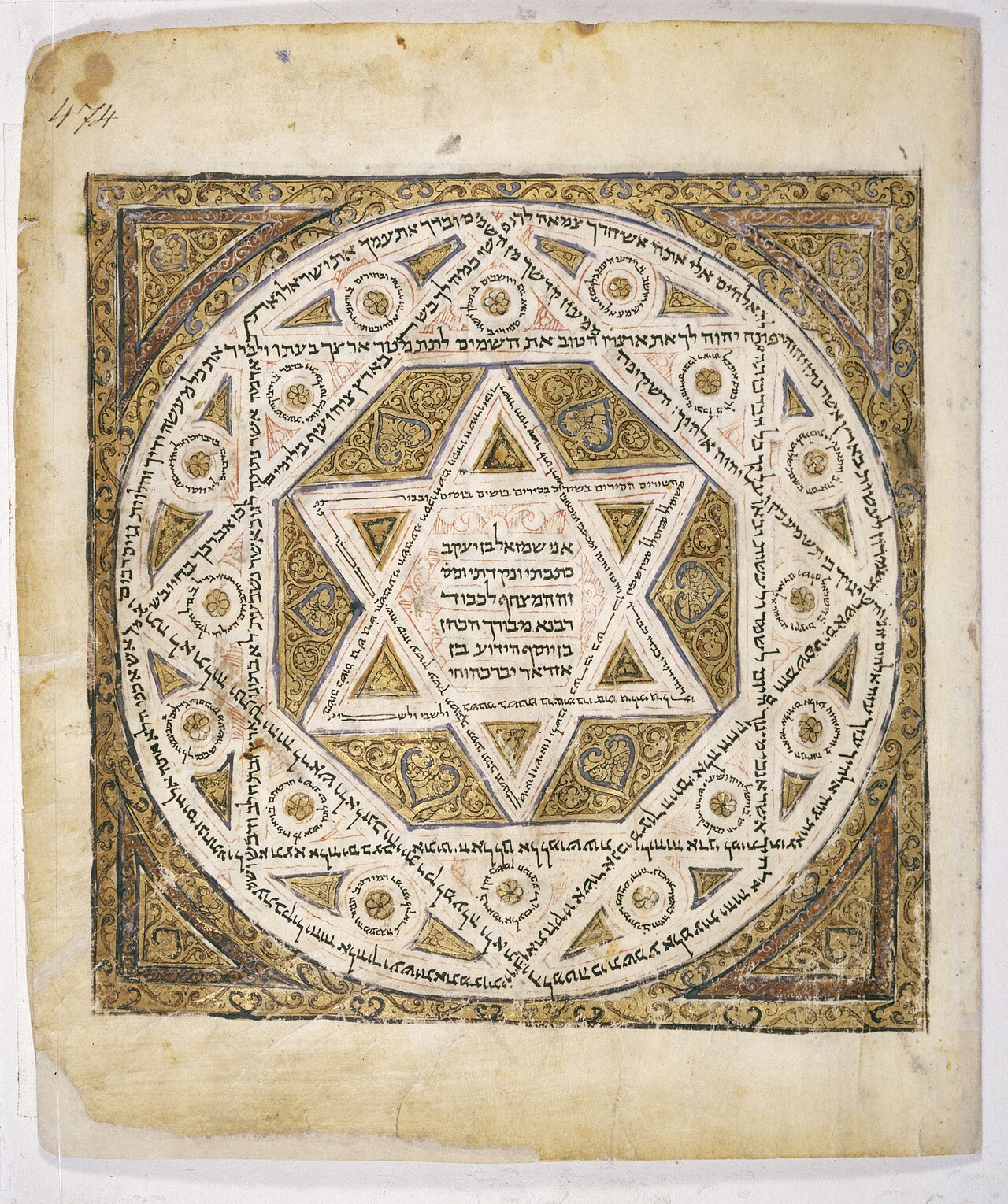
The minyan — ten.
It is the smallest unit of Jewish public life and the reason a mourner cannot grieve alone: kaddish requires a room. Small communities organise their entire week around whether ten people can be found at seven in the morning.
Ten is the number at which private Judaism becomes public Judaism. Below a minyan a person prays the same words, but the kaddish is not said, the Torah is not read, the Amidah is not repeated aloud, and the priestly blessing is not given. The number is derived, characteristically, from a piece of verbal argument: the ten spies who brought back a bad report are called an edah, a congregation, so a congregation is ten. Who counts is one of the sharpest visible differences between movements — Orthodox practice counts men over thirteen only, Conservative Judaism formally permitted counting women in 1973 and most of its congregations do, and Reform and Reconstructionist communities never restricted it. The practical weight of the rule falls on mourners: a person saying kaddish for a parent needs a room of ten, twice a day, for eleven months, which is why small communities keep lists, why people are phoned at six in the morning, and why a Jewish community that cannot assemble ten is understood to be dying. It is also the reason a mourner is forced back into company at the exact moment they would rather not be.
The same ground, other faiths
claims that share this one's ideasSign in to open the first thread. Everything here is attributed.