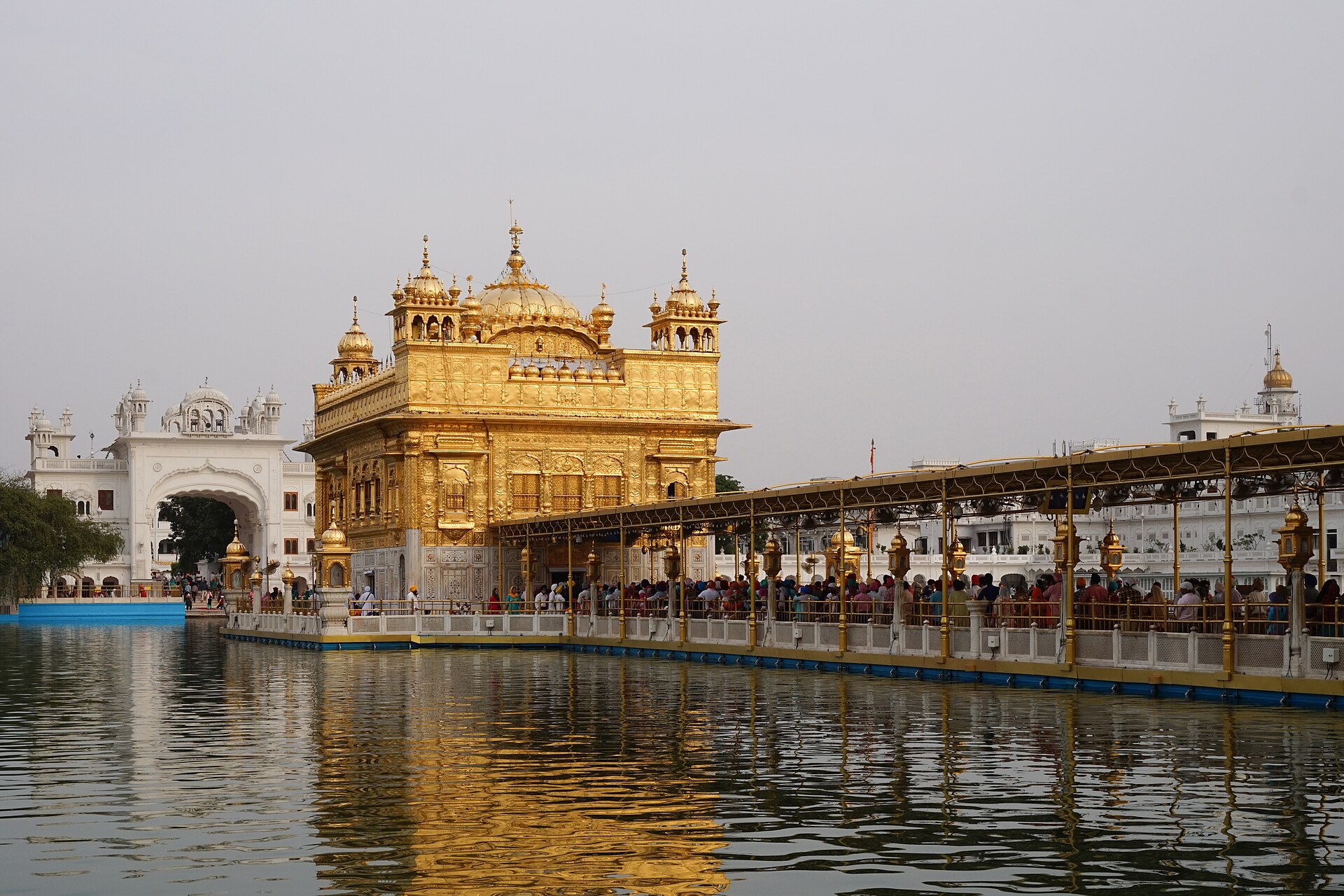
Ardas — the standing prayer.
Everyone rises, and the prayer runs through the ten Gurus, the martyrs, the shrines, then finally the specific request — a sick relative, a driving test, a new shop. It ends by asking for the good of all people, not only Sikhs, and any Sikh present may lead it.
Ardas is where Sikh collective memory is actually stored, and it is one of the very few Sikh texts not from the Guru Granth Sahib. It opens with a stanza from Chandi di Var invoking the Gurus, moves through the martyrs by category — those dismembered, scalped, broken on the wheel, those who kept the gurdwaras and gave their lives for them — then names the shrines, then asks for the specific thing at hand. It ends by asking for the welfare of all, sarbat da bhala, which is the line most quoted about Sikhism and the one Sikhs are most attached to. Anyone may lead it, standing, which is a small structural fact with large consequences: there is no gatekeeper between a Sikh and the prayer. Its wording has been amended over time and the additions are themselves a record — the paragraph about the gurdwara reform movement is a twentieth-century insertion, and there has been persistent argument about whether 1984 should be named in it.
Nanak: through the Name, spirits rising — and in Your will, the good of everyone.
Closing line of the Ardas, Sikh Rehat Maryada (rendered)The last thing said, twice a day, after a list of the community's own dead.
The same ground, other faiths
rites that share this one's ideasSign in to open the first thread. Everything here is attributed.