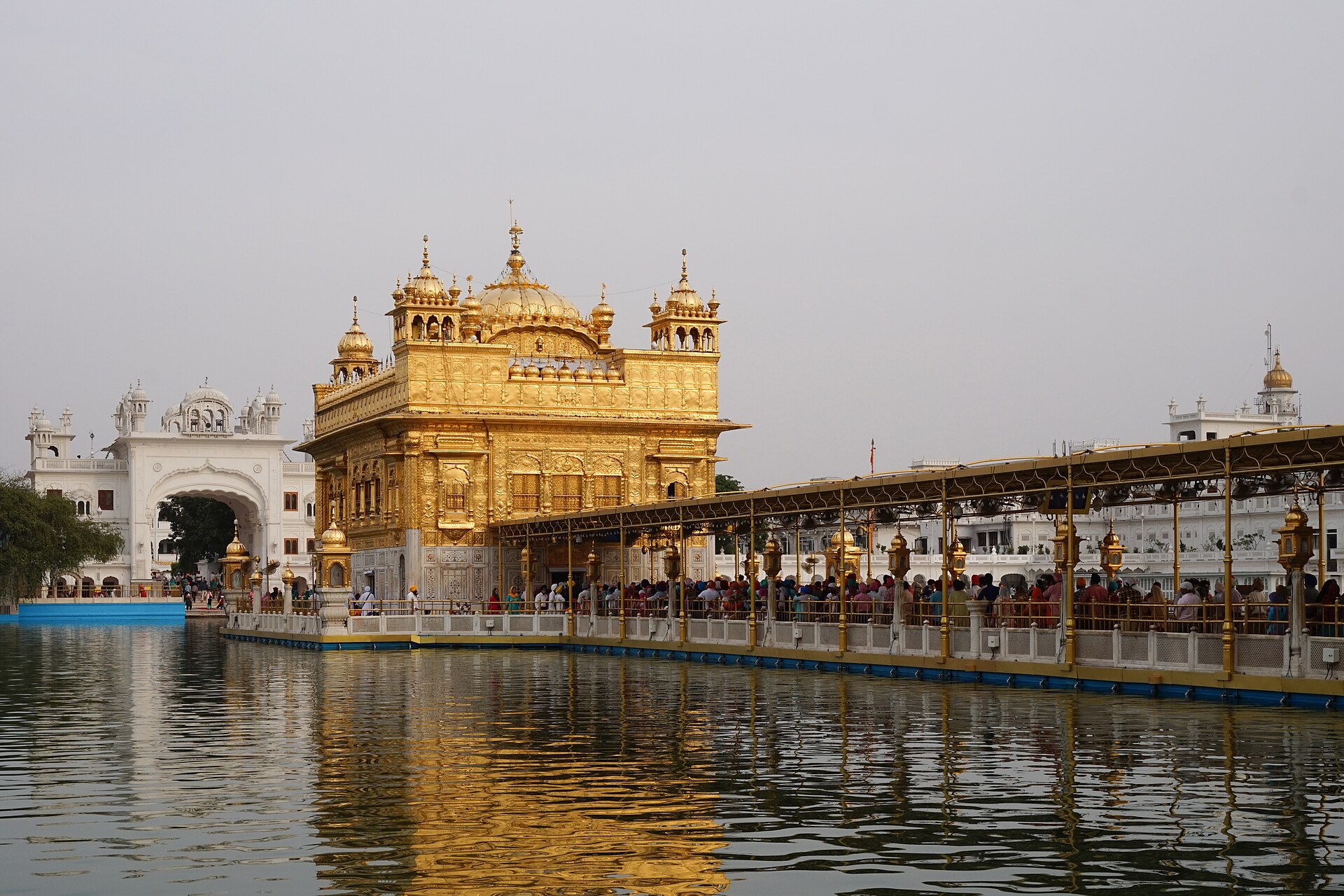
Prakash and Sukhasan — the Guru wakes and sleeps.
At dawn the scripture is carried on someone's head to a canopied throne, opened, and fanned with a whisk all day; at night it is wrapped and carried to its own room, where it has a bed. Sikhs describe this as the courtesy owed a living sovereign, and reformers inside the Panth ask, regularly, where the line to idolatry now sits.
Prakash and sukhasan are where outside observers get most uncomfortable and where the Panth argues with itself hardest. The Guru Granth Sahib is installed on a throne under a canopy, fanned with a chaur whisk, and never left uncovered; at night it is wrapped in cloths and carried on someone's head to a separate room where it rests on a bed. Sikhs describe this as protocol owed to a sovereign, not worship of paper, and point out that the tradition bans images precisely to keep the distinction. Reformers — Sikh missionary colleges especially — argue that the practice has drifted into exactly the object-veneration Nanak attacked, and that the money spent on rumalas and palanquins would be better spent on people who could read what is inside. Nothing has moved. The strength of feeling is measurable: the desecration of scripture copies at Bargari in 2015 triggered mass protests and police firing that killed two men at Behbal Kalan, and the case has poisoned Punjabi politics ever since.
The same ground, other faiths
rites that share this one's ideasSign in to open the first thread. Everything here is attributed.