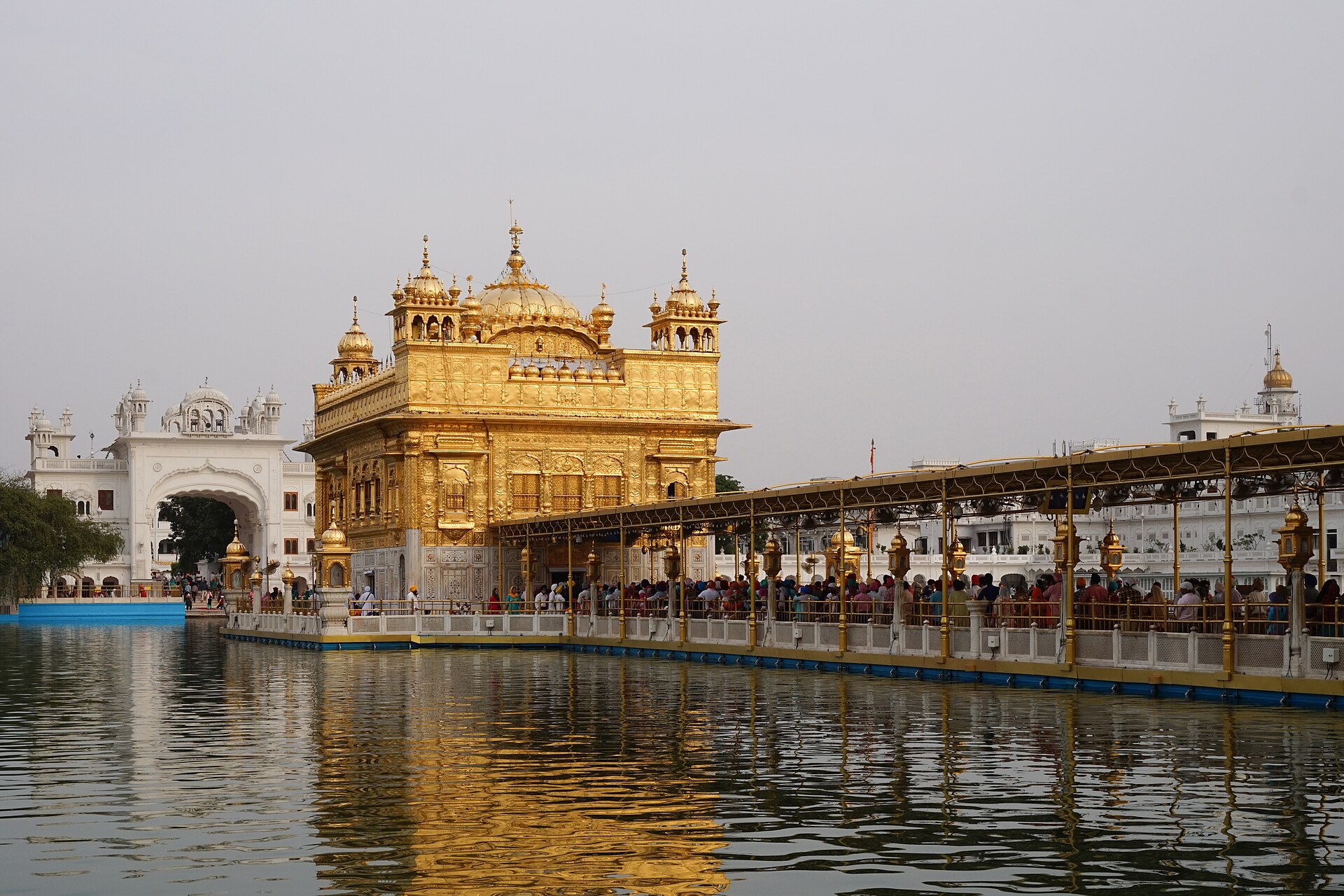
Caste has no standing here.
One surname, one row on the floor, one bowl of amrit, and a marriage rite that involves no astrologer. It is the tradition's founding social claim, and the gap between it and rural Punjab is the thing Sikh reformers are angriest about.
This is the tradition's founding social claim and its most visible failure. Doctrinally the position is unambiguous — caste has no metaphysical standing, one surname, one row on the floor, one bowl at initiation, and Guru Amar Das made eating together a precondition of an audience. In practice: Punjabi Sikhs marry within caste as a matter of routine, matrimonial advertisements state it openly, Jat, Ramgarhia, Ravidasia and Mazhabi communities maintain separate gurdwaras in Punjab and in Britain, and many Punjab villages have separate cremation grounds. Dalits are roughly a third of Punjab's population, the highest share of any Indian state, and are underrepresented in the bodies that run the gurdwaras. The clearest measure of the failure is the Ravidassia declaration of a separate religion in 2010 after the killing of Sant Ramanand in Vienna, taking Ravidas's own verse out of the Sikh scripture and into a book of their own. Sikhs argue about how to describe this; almost nobody inside the tradition denies it is happening.
The same ground, other faiths
claims that share this one's ideasSign in to open the first thread. Everything here is attributed.