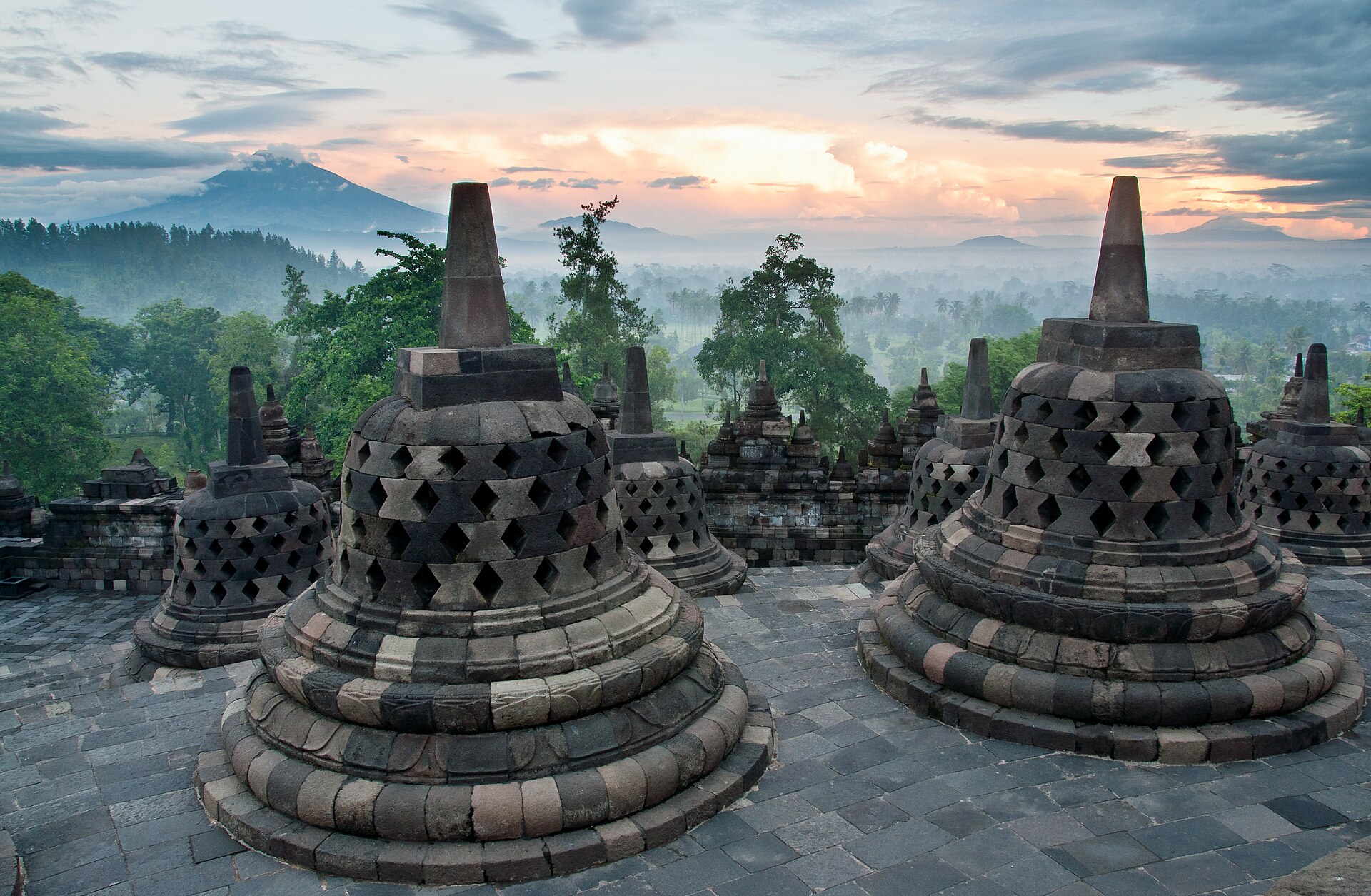
The poisoned arrow.
Malunkyaputta threatened to quit the order unless the Buddha settled whether the universe is eternal and what happens to an awakened being after death. The answer was a scenario: a man shot with a poisoned arrow who refuses treatment until he is told the archer's caste, name, height, the wood of the shaft and the bird the feathers came from. He dies uninformed. Some questions are not answered because answering them is not the job.
The poisoned arrow is the clearest statement of Buddhist method there is. The unanswered questions — whether the cosmos is eternal, whether it is finite, whether an awakened being exists after death — are set aside not because they are unanswerable in principle but because the answers do not remove the arrow. The Buddha lists what he does teach immediately afterward: suffering, its origin, its cessation, and the way. It is also the passage most often used to argue that Buddhism is compatible with any cosmology, which is a slightly larger claim than the text is making.
The same ground, other faiths
claims that share this one's ideasSign in to open the first thread. Everything here is attributed.