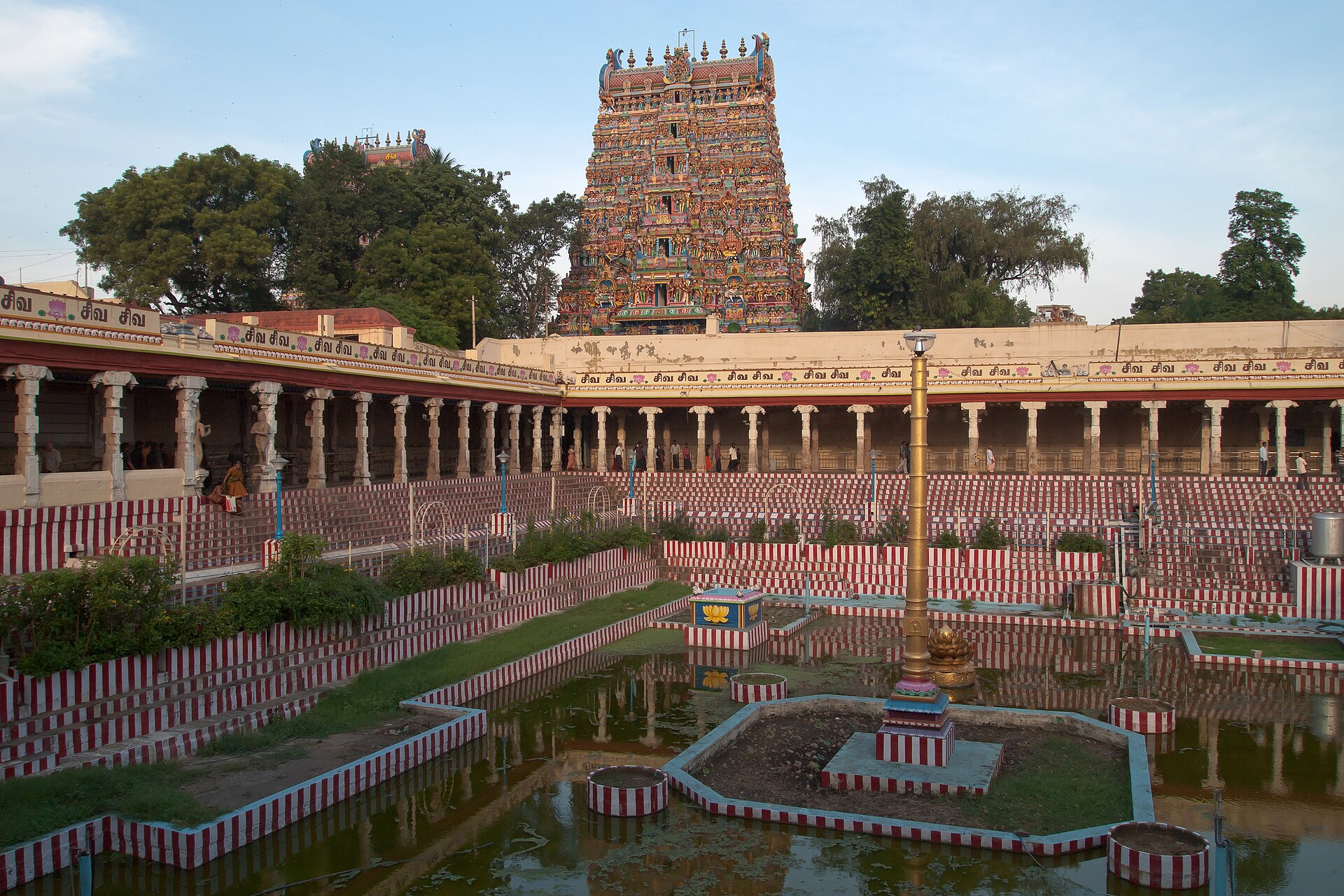
Meenakshi Temple gopuram, Madurai · Vyacheslav Argenberg · CC BY 4.0
ॐ

Hinduism

Tradition·Founding date unrecorded·est. ~1.2 billion worldwide

Vedic Religion → Hinduism → 8 branches

Branch
Story of Hinduism

Arjuna at Kurukshetra.

A warrior freezes before a battle against his own kin, and Krishna speaks the Gītā — duty argued at the edge of catastrophe.

Where it is toldThe Bhagavad Gita, inside the Mahabharata
Who appearsArjuna, Krishna, and two armies standing still
What it teachesThat the way out of paralysis is action without a grip on its result
Understanding it — context, not catechism: how this passage is held

The Gita is a conversation held in the pause before a battle: Arjuna sees his teachers and cousins in the opposing army, and refuses to fight. Krishna's answer moves from duty to the imperishable self to the three paths and finally to devotion, and the poem's enduring power is that the crisis is recognizable — a person paralyzed by a genuine moral conflict. Gandhi read the battle as allegory for the struggle within; others read it literally. Both readings have shaped modern India.

From the sources — the passages this rests on; concise renderings, cited

You have a right to your actions, never to their fruits.

Bhagavad Gita 2.47

The Gita's most quoted line, and its answer to paralysis.

The same ground, other faiths

claims that share this one's ideas
Ritual sustains the order of the world. Vedic Religion · core tenet Go deeper →
The first sermon at Sarnath. Buddhism Read it in full →
Nobody made the universe. Jainism · core tenet Go deeper →
Creation is good, and it was made out of nothing. Christianity · core tenet Go deeper →
The Dao bore one, one bore two, two bore three. Taoism · core tenet Go deeper →
Heaven ordains a moral order. Confucianism · core tenet Go deeper →

The conversation

argument stays attached to the claim it is about All discussion →

Sign in to open the first thread. Everything here is attributed.

Built on Hatchable