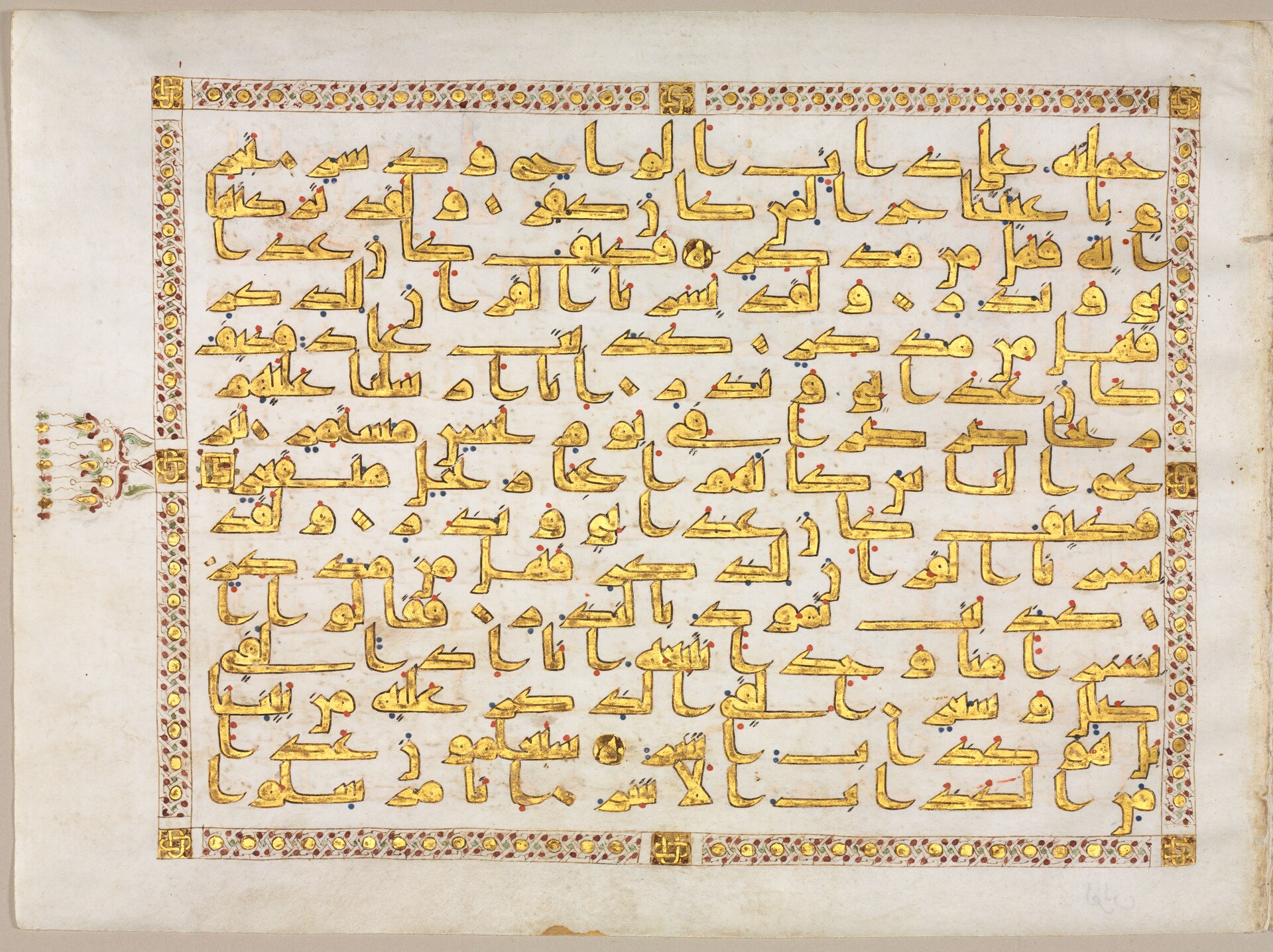
Tafsir.
Verse-by-verse commentary — al-Tabari's runs to thirty volumes and quotes everyone he disagrees with. Which tafsir a mosque or a family uses is a sharper indicator of where they stand than which school they name, and the twentieth-century Urdu and Indonesian commentaries reshaped the religion for hundreds of millions.
Tafsir is verse-by-verse commentary, and the tradition is enormous. Al-Tabari's tenth-century work runs to thirty volumes and preserves competing interpretations side by side, naming who held what, which makes it as much an archive as an argument. Ibn Kathir's fourteenth-century commentary, which prioritises explaining the Quran with the Quran and with hadith, has become dominant in modern Salafi-influenced circulation partly because it is available cheaply in translation everywhere. Al-Zamakhshari's is prized for grammar and rhetoric despite his Mutazili theology. The twentieth century produced commentaries that reshaped the religion for hundreds of millions: Mawdudi's Tafhim al-Quran in Urdu, Sayyid Qutb's In the Shade of the Quran written substantially in an Egyptian prison, Tabatabai's al-Mizan in the Shia tradition, and Hamka's Tafsir al-Azhar in Indonesian. Which commentary a family or a mosque uses is a sharper indicator of its theological and political position than which school of law it names, and the cheap mass distribution of particular commentaries has been one of the most effective religious interventions of the last fifty years.
The same ground, other faiths
claims that share this one's ideasSign in to open the first thread. Everything here is attributed.