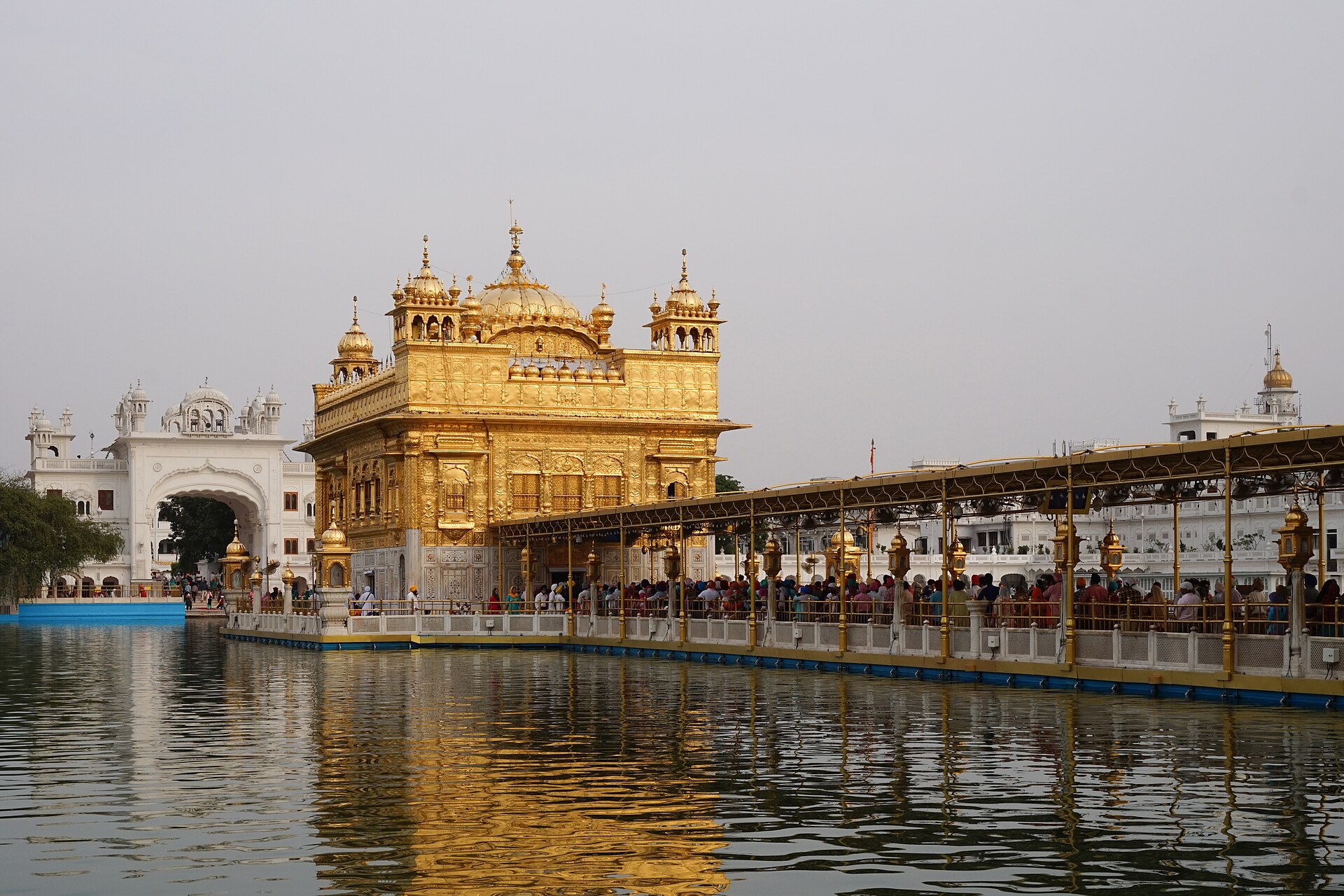
Gurmatta — the Panth decides.
Guru Gobind Singh split his authority: half to the book, half to the community. A gurmatta is a resolution taken by the sangat in the presence of the Guru Granth Sahib, and the doctrine that five Sikhs sitting together carry the Guru's authority is why the tenth Guru obeyed five of his own men at Chamkaur.
Guru Gobind Singh divided his authority in two before he died: the Guru Granth Sahib and the Guru Panth, the scripture and the community. A gurmatta is a decision taken by the sangat in the presence of the scripture on a matter affecting the Panth as a whole, and historically the Sarbat Khalsa — the whole community assembled, usually at Amritsar at Vaisakhi or Diwali — was the body that took them. The doctrine that five Sikhs together carry the Guru's authority is not decorative: at Chamkaur the five remaining Sikhs ordered Guru Gobind Singh himself to leave the battlefield, and he obeyed. Five Sikhs still administer amrit, still lead processions, and still pronounce discipline on anyone. In practice the Sarbat Khalsa has not functioned as a regular institution for two centuries; attempts to convene one, most visibly in 2015, have been contested as factional and were not recognised by the SGPC. So the community holds a genuine constitutional doctrine of collective authority with no working mechanism to exercise it, which is a large part of why Sikh institutional politics is as unresolved as it is.
The same ground, other faiths
claims that share this one's ideasSign in to open the first thread. Everything here is attributed.