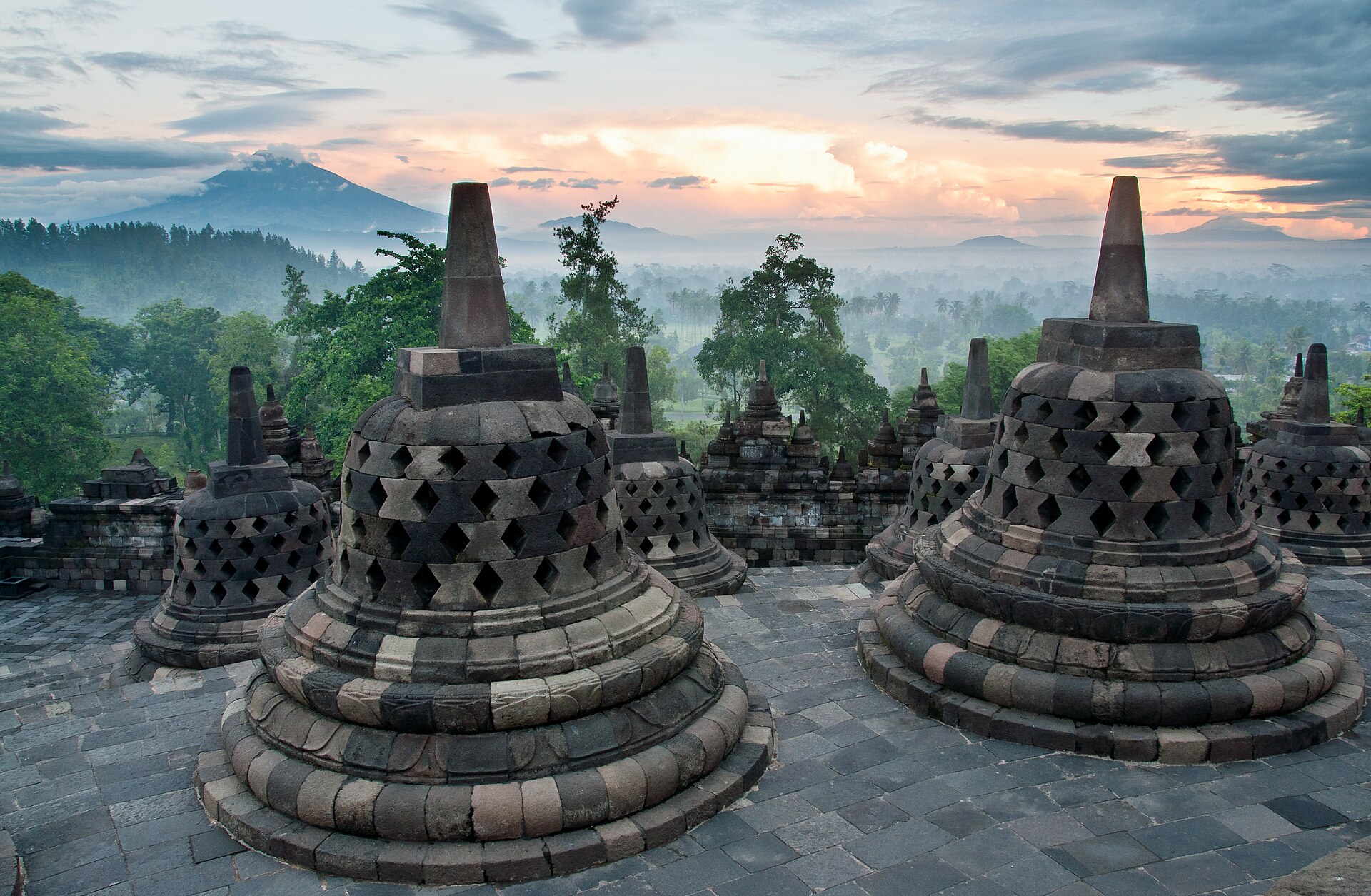
Borobudur at sunrise · Justine Hong · CC BY 2.0

Buddhism

Tradition·Founded c. 480 BCE·est. ~500 million worldwide

Vedic Religion → Buddhism → 3 branches

Branch
Precept of Buddhism

The bodhisattva vow.

Beings are numberless; I vow to free them all. Taken out loud, in ceremony, by people who can do arithmetic — the impossibility is doing the work.

What it asksTo postpone your own final release until every being is free
Who it bindsWhoever takes it — publicly, in ceremony, usually knowing better
Where it bitesIt cannot be completed. Mahayana treats the impossibility as the mechanism, not a flaw in the drafting
Understanding it — context, not catechism: how this passage is held

The bodhisattva vow is taken publicly, in ceremony, and it commits the taker to something that cannot be finished. Beings are numberless and the vow is to free all of them; the classical formulations pile the impossibilities up deliberately — delusions inexhaustible, dharma gates boundless. The tradition's explanation is that a completable goal would let you finish and stop, and any goal you could finish would be a goal about yourself. In practice the vow reorganises the ordinary business of a life around other people rather than adding a task to it, and teachers advise taking it long before you feel qualified, since feeling qualified is not one of the conditions.

The same ground, other faiths

claims that share this one's ideas
Bandi Chhor — the fifty-two. Sikhism · story Read it in full →
The self is reborn until liberation. Hinduism · core tenet Go deeper →
The soul is liberated by its own effort. Jainism · core tenet Go deeper →
Guard the tongue. Judaism Go deeper →
Love of God and neighbor is the whole law. Christianity · core tenet Go deeper →
Your parents have a claim on you. Islam Go deeper →

The conversation

argument stays attached to the claim it is about All discussion →

Sign in to open the first thread. Everything here is attributed.

Built on Hatchable