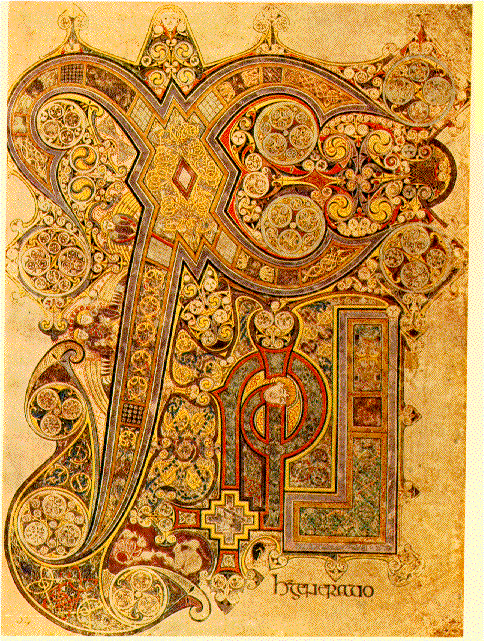
Book of Kells, Chi Rho folio, c. 800 · public domain

Christianity

Tradition·Founded 30 CE·est. ~2.4 billion worldwide

Judaism → Christianity → 11 branches

Branch
Story of Christianity

Pentecost.

Wind, fire, and a room of Galileans suddenly intelligible in every pilgrim's home language: the church's founding miracle is translation.

Where it is toldActs 2 — the church's birthday
Who appearsThe apostles, wind, fire, a polyglot crowd
What it teachesThe undoing of Babel: one message, every language, no empire required
Understanding it — context, not catechism: how this passage is held

Pentecost falls on the Jewish festival of Shavuot, which the audience was in Jerusalem to observe, and the miracle reported is linguistic: everyone hears in their own language. Read against Babel, where language was confused to scatter humanity, the scene is a deliberate reversal — unity without uniformity, since the languages are not abolished but understood. That detail underwrote Christianity's pattern of translating its scriptures into vernaculars rather than fixing a sacred language, which is a real difference from its neighbors.

From the sources — the passages this rests on; concise renderings, cited

How is it that we hear, each of us, in our own native language?

Acts 2:8

The founding miracle is translation, not a common tongue.

The same ground, other faiths

claims that share this one's ideas
Satsang — the singing evening. Hinduism · rite Go deeper →
The fourfold sangha. Buddhism · community Go deeper →
Micchami dukkadam. Jainism · rite Go deeper →
Argument, for the sake of heaven, is sacred. Judaism · core tenet Go deeper →
Jumu'ah — the Friday assembly. Islam · rite Go deeper →
The Sikh Rehat Maryada. Sikhism · scripture Open the book →

The conversation

argument stays attached to the claim it is about All discussion →

Sign in to open the first thread. Everything here is attributed.

Built on Hatchable