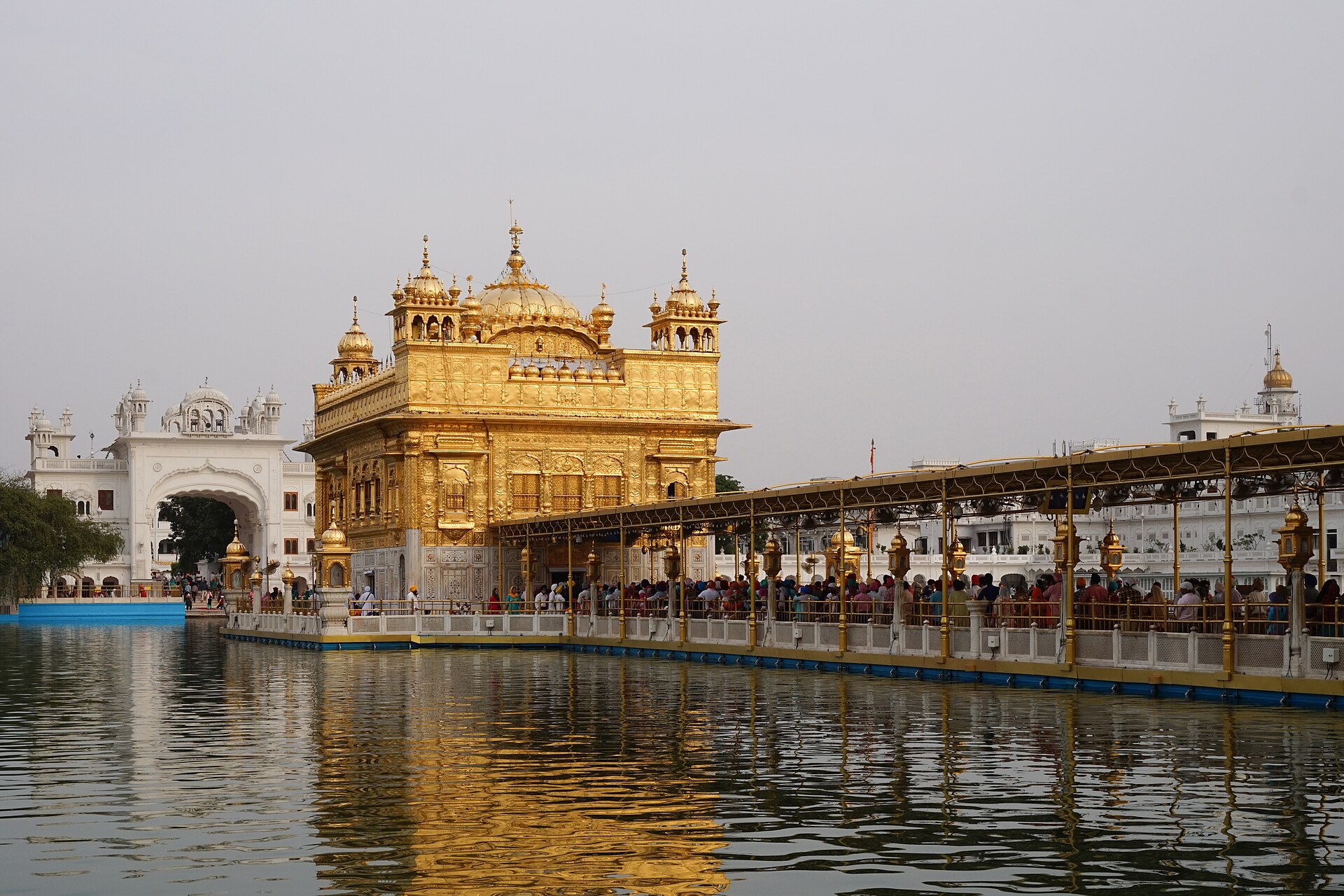
The Akal Takht and the five Takhts.
Guru Hargobind built the throne of the timeless facing the Golden Temple in 1606, and it remains the seat from which the Panth's collective decisions are pronounced. Four other Takhts share the authority — Kesgarh where the Khalsa was founded, Damdama, Patna where the tenth Guru was born, and Hazur Sahib where he died.
The Akal Takht is the seat of the Panth's temporal authority, built by Guru Hargobind in 1606 facing the Harmandir Sahib, and four other Takhts share the honour: Kesgarh Sahib at Anandpur where the Khalsa was founded, Damdama Sahib at Talwandi Sabo, Patna Sahib where Guru Gobind Singh was born, and Hazur Sahib at Nanded where he died. Its jathedar issues hukamnamas binding on Sikhs, can summon any Sikh, and can excommunicate. The structural problem is that the jathedar is appointed and removed by the SGPC, which is controlled by whichever party holds it, so the seat meant to hold worldly power to account is staffed by worldly power. This is not an outside critique — Punjabi commentary says it constantly, and the Tribune has run it as an editorial line for years. The office has been in open dispute since 2015, with rival claimants recognised by different bodies, and the two seats outside Punjab, Patna and Hazur Sahib, have their own committees and their own rehat and do not always follow Amritsar.
The same ground, other faiths
claims that share this one's ideasSign in to open the first thread. Everything here is attributed.