Who pays for it.
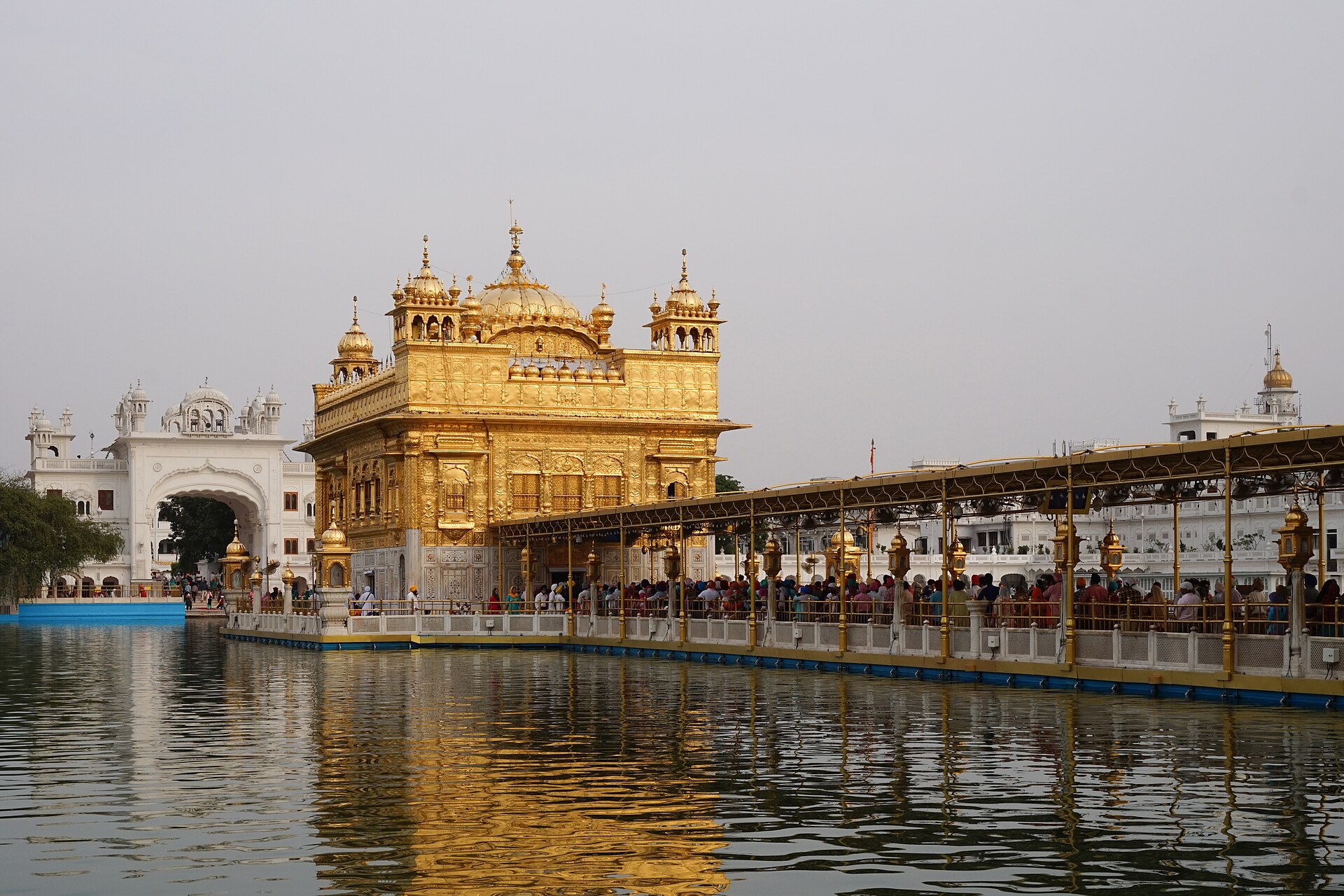
The golak box by the door, the daswandh a family gives directly, and kar seva — unpaid labour, including the labour that physically builds and dredges the shrines. Nobody is billed and nothing is means-tested, and the Golden Temple's kitchen alone gets through several tonnes of flour and lentils a day on that basis.
The money comes from three places and none of them is a bill. The golak, a locked box by the entrance that people drop notes into on their way to bow. Daswandh, the tenth given directly. And kar seva — labour given free, including the labour that builds and repairs the buildings and periodically drains and desilts the sarovar at Amritsar with tens of thousands of volunteers. The Golden Temple's kitchen runs on donated grain and volunteer hands and serves in the tens of thousands daily without ever asking who anyone is. The weakness is the absence of accounting: the SGPC handles very large revenues, diaspora gurdwaras hold significant property, and disputes about how the golak is counted and spent are among the most common causes of committee splits and court cases in Britain, Canada and the United States. A tradition that removed the priesthood did not remove the treasury, and control of the treasury is where power reassembled.
The same ground, other faiths
claims that share this one's ideasSign in to open the first thread. Everything here is attributed.