Tankhah — how the Panth disciplines its own.
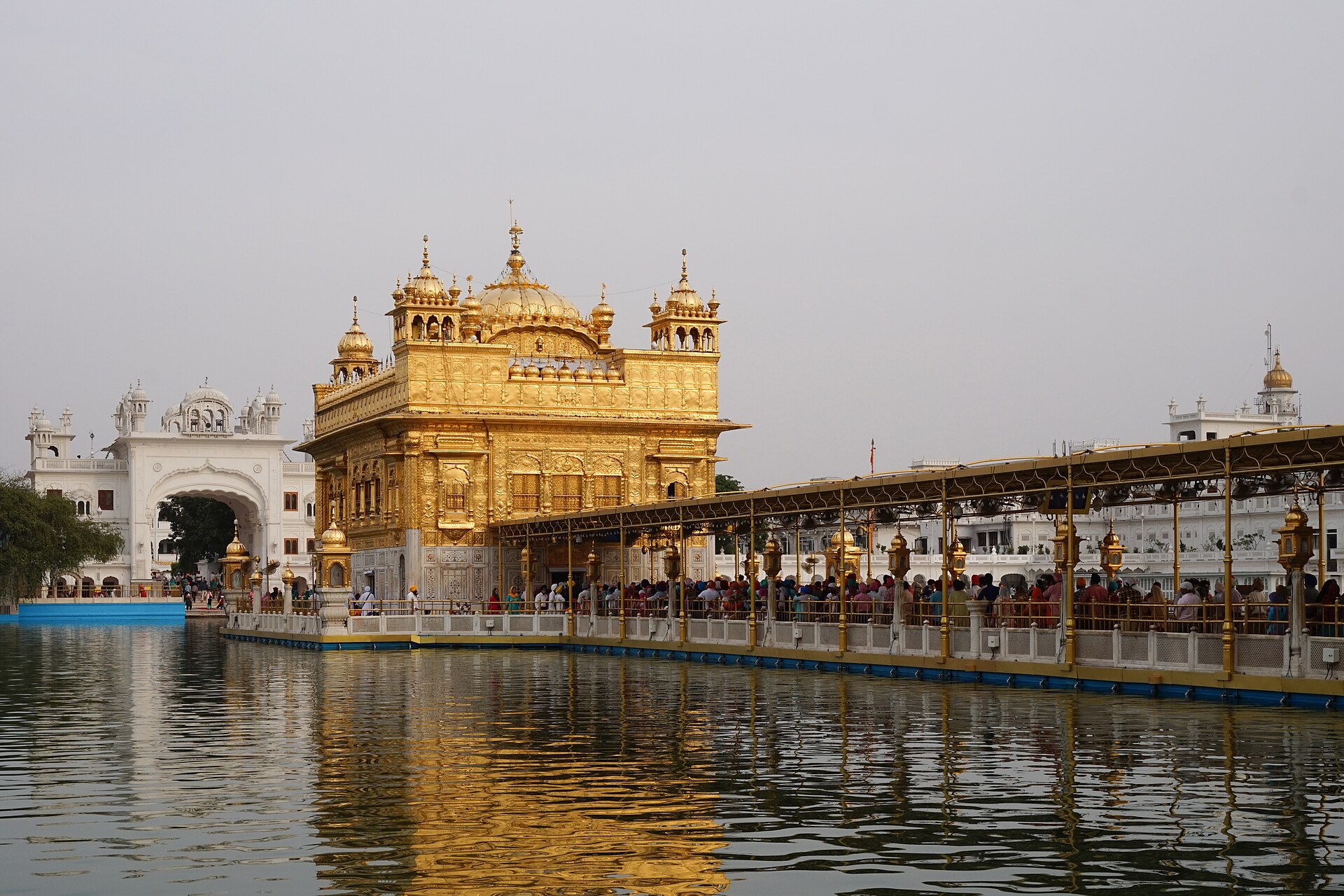
A Sikh found at fault is summoned, and the sentence is service rather than money: washing dishes, cleaning shoes, reciting for a fixed period, in public. In December 2024 the Akal Takht sentenced Sukhbir Singh Badal, the head of the Akali Dal, to sit at the Golden Temple gate in a sevadar's clothes with a placard listing his offences — and a gunman tried to kill him while he did it.
Tankhah is Sikh discipline, and its shape is instructive: the penalty is service, performed publicly, not a fine or exclusion. A Sikh found at fault is summoned before five Sikhs or a Takht, admits the fault, and is given seva — washing dishes, cleaning shoes, sweeping, reciting for a set period — after which they are restored. The mechanism reaches everybody in principle. In December 2024 the Akal Takht declared Sukhbir Singh Badal, president of the Shiromani Akali Dal and former deputy chief minister, a tankhaiya and sentenced him to sit at the entrance of the Golden Temple in a sevadar's blue clothes with a placard listing his offences, then clean utensils and shoes; he did it in a wheelchair with a broken leg, and on the second day a gunman opened fire at him at close range and missed. The episode is cited both as proof that the institution still has teeth and as proof that it has become an instrument in a factional war, since the same Takht's jathedars are appointed by a committee his own party controlled.
So long as the Khalsa remains distinct, I give it all my strength; when it takes on other ways, I will not trust it.
Rehatnama couplet traditionally attributed to Guru Gobind Singh (rendered)Widely quoted as the Guru's own; it comes from the rehatnama literature, not from the Guru Granth Sahib.
The same ground, other faiths
claims that share this one's ideasSign in to open the first thread. Everything here is attributed.