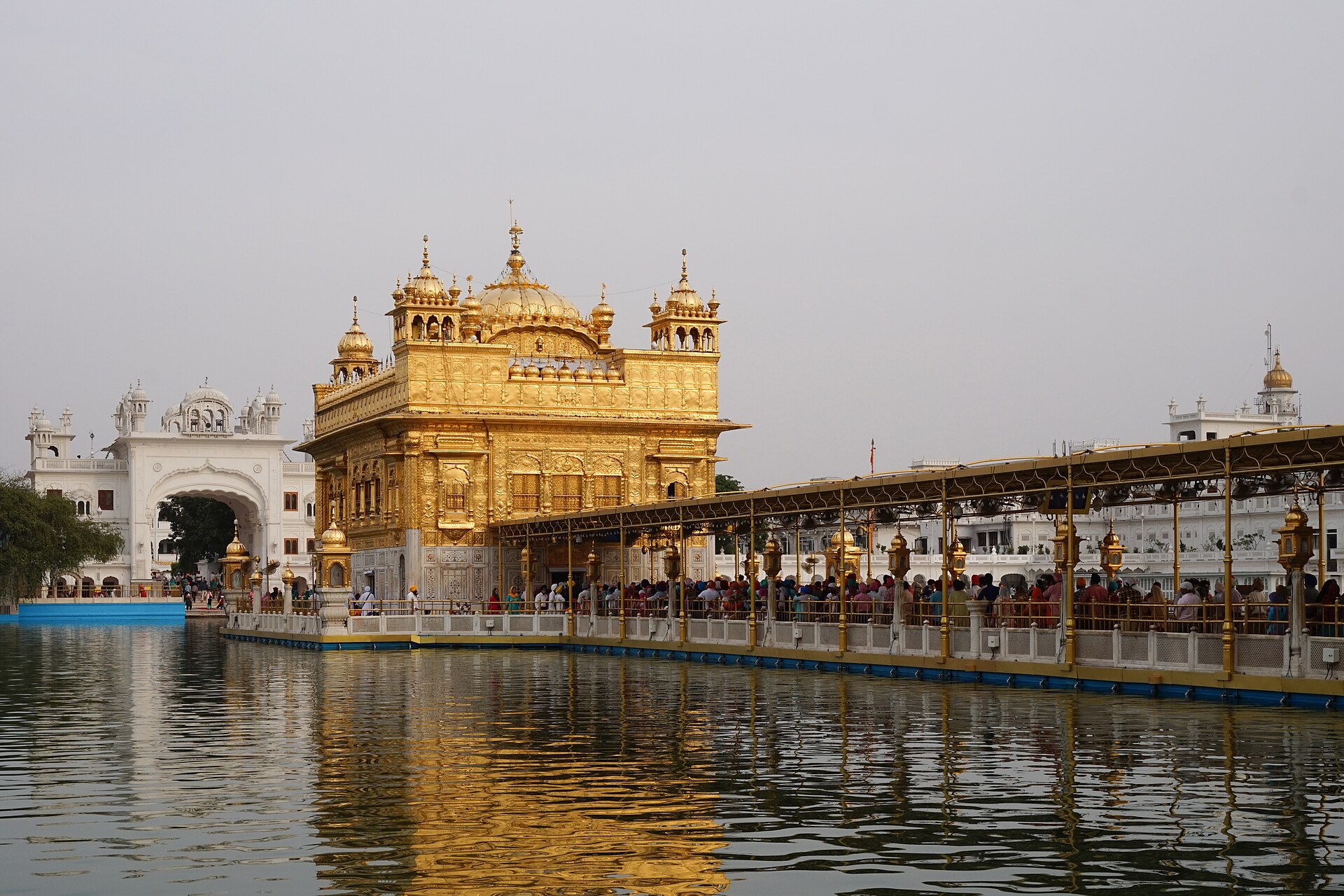
Chardi kala — spirits that will not go down.
Usually translated as high spirits, and closer to a standing refusal of despair. It is the last thing said in the Ardas, twice a day, by a community whose prayer has just finished listing everyone who was tortured to death.
Go deeper — context →
Nam simran — the Name, repeated.
The discipline Guru Nanak set at the center: remembrance of the Name until remembrance becomes the background of everything else.
Go deeper — context & 1 source →
Sahaj — the state that holds by itself.
The word means natural, easy, without effort, and it is what the practice is aiming at: a mind that has stopped seesawing without being held still. Sikh writers are careful to say it cannot be produced on demand, which is what separates it from a technique.
Go deeper — context →
Anand — bliss, in the middle of an ordinary day.
Guru Amar Das opens his composition by telling his mother he is in bliss, and gives the cause as finding the Guru rather than any change in circumstance. Sikhs hear the word at every wedding, since the marriage rite is named after it.
Go deeper — context →
Vismad — astonishment.
A salok in Asa ki Var simply repeats the word down the page — wondrous, wondrous, wondrous — applied to sound, sight, air, water, fire, birth and death in turn. It is one of the few religious states in the corpus that is not a stage on the way to something else.
Go deeper — context →
Bhana manna — accepting the will.
Not passivity and Sikhs will correct you sharply if you call it that: it is the end of the internal argument with what has already happened. The line quoted is Guru Arjan's, said under torture — sweet is Your doing, and all I ask for is the Name.
Go deeper — context & 1 source →
The five khands.
Japji closes by mapping five realms the mind passes through: duty, knowledge, effort, grace, and truth. Nanak describes the first four and then says that describing the fifth is like chewing steel, which is the only honest thing to do with it.
Go deeper — context →
When the I goes quiet.
The whole diagnosis is haumai — the self that will not stop announcing itself — so the goal is a person for whom that has simply stopped being interesting. Sikh vocabulary calls such a person gurmukh, facing the Guru, against the manmukh who is still taking orders from his own head.
Go deeper — context & 1 source →