The shaheeds — the martyrs named in the prayer.
Bhai Mati Das sawn in half in Delhi; Bhai Taru Singh's scalp cut away rather than his hair cut; Baba Deep Singh dead at Amritsar at seventy-five. Twice a day the Ardas recalls those who were cut apart limb by limb and scalped and never gave up their faith, which is how a small community keeps a very long memory.
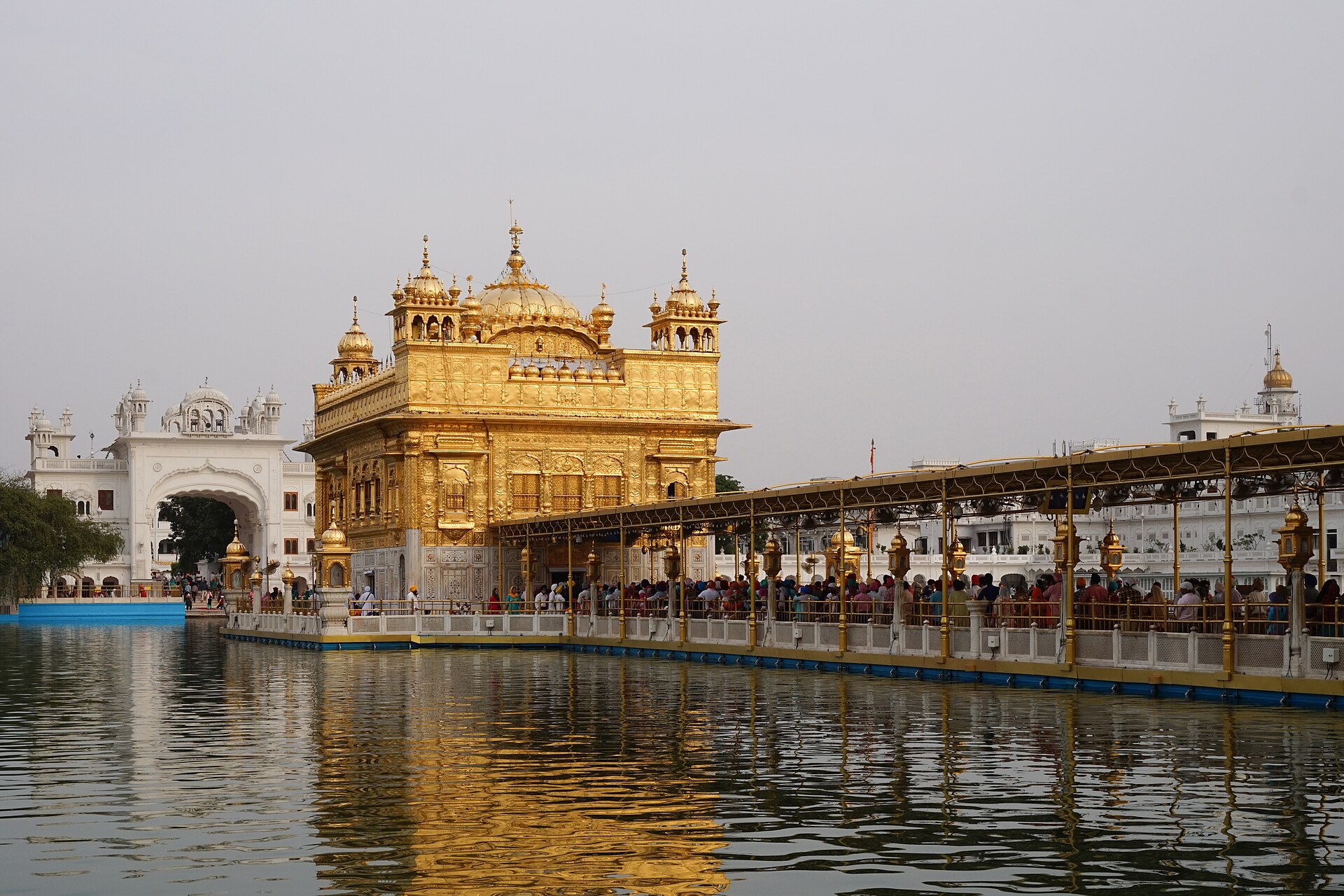
Sikh martyrdom is liturgical, not merely historical: the Ardas said twice daily runs through categories of shaheed — those who were dismembered, scalped, broken on the wheel, sawn apart, who gave their heads but not their faith. That paragraph is why an eight-year-old Sikh in Vancouver knows the names. Bhai Mati Das and Bhai Dayala were executed in front of Guru Tegh Bahadur to break him; Bhai Taru Singh chose scalping over a haircut in 1745; Bhai Mani Singh was dismembered joint by joint in 1738; Baba Deep Singh died retaking Amritsar in 1757 at seventy-five. The tradition also tells the story of Deep Singh fighting on with his severed head in his hand, and most Sikhs will tell you plainly that this part is not history — the point is what it says about the obligation to reach the shrine. The list stayed open: 1984 and its aftermath added names to the same prayer, which is one reason the memory is politically live rather than antiquarian.
The same ground, other faiths
claims that share this one's ideasSign in to open the first thread. Everything here is attributed.