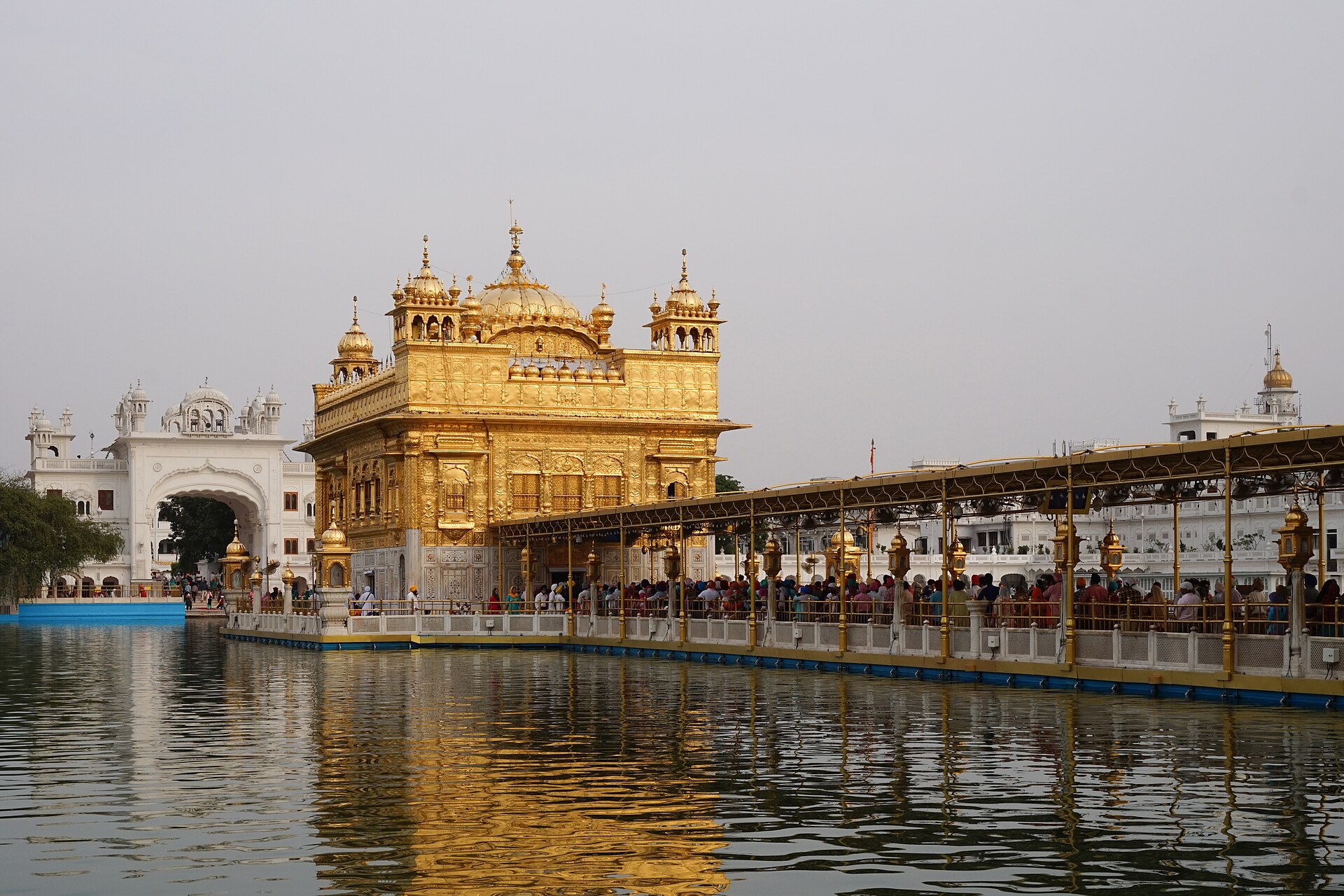
Harmandir Sahib, Amritsar · Bernard Gagnon · CC BY-SA 4.0

Sikhism

Tradition·Founded 1499 CE·est. ~26 million worldwide

Sikhism → 1 branch

Branch
W Figure of Sikhism

Waheguru — the One.

Formless, timeless, beyond gender and image: not worshipped through idols or avatars, but remembered — the Name repeated until it hums beneath ordinary work.

Names & titlesWaheguru, Ik Onkar, Akal Purakh — the timeless one
DomainThe one formless reality
Depicted asNever — remembered, not portrayed
StandingRemembered constantly; the Name itself is the practice
Understanding it — context, not catechism: how this passage is held

Waheguru is the name most used in Sikh practice, and the theology behind it starts from the Mul Mantar: one reality, truth by name, creator, without fear, without enmity, timeless, unborn, self-existent. God in Sikhism is nirguna (beyond attributes) and saguna (present in all things) at once, has no incarnations, and is not represented in images — gurdwaras contain no idols, only the scripture. The name itself is used as the practice: repeated in nam simran until remembrance runs underneath everything else.

The same ground, other faiths

claims that share this one's ideas
God is one, indivisible, and engaged with history. Judaism · core tenet Go deeper →
There is no god but God. Islam · core tenet Go deeper →
God's name is Jehovah, and he is one person. Jehovah's Witnesses · core tenet Go deeper →
God is One, beyond every description. The Druze Faith · core tenet Go deeper →
S Shiva — a point of light that is never born. The Brahma Kumaris Meet them →
Shangdi is the one God, and the idols are demons. The Taiping Heavenly Kingdom · core tenet Go deeper →

The conversation

argument stays attached to the claim it is about All discussion →

Sign in to open the first thread. Everything here is attributed.

Built on Hatchable