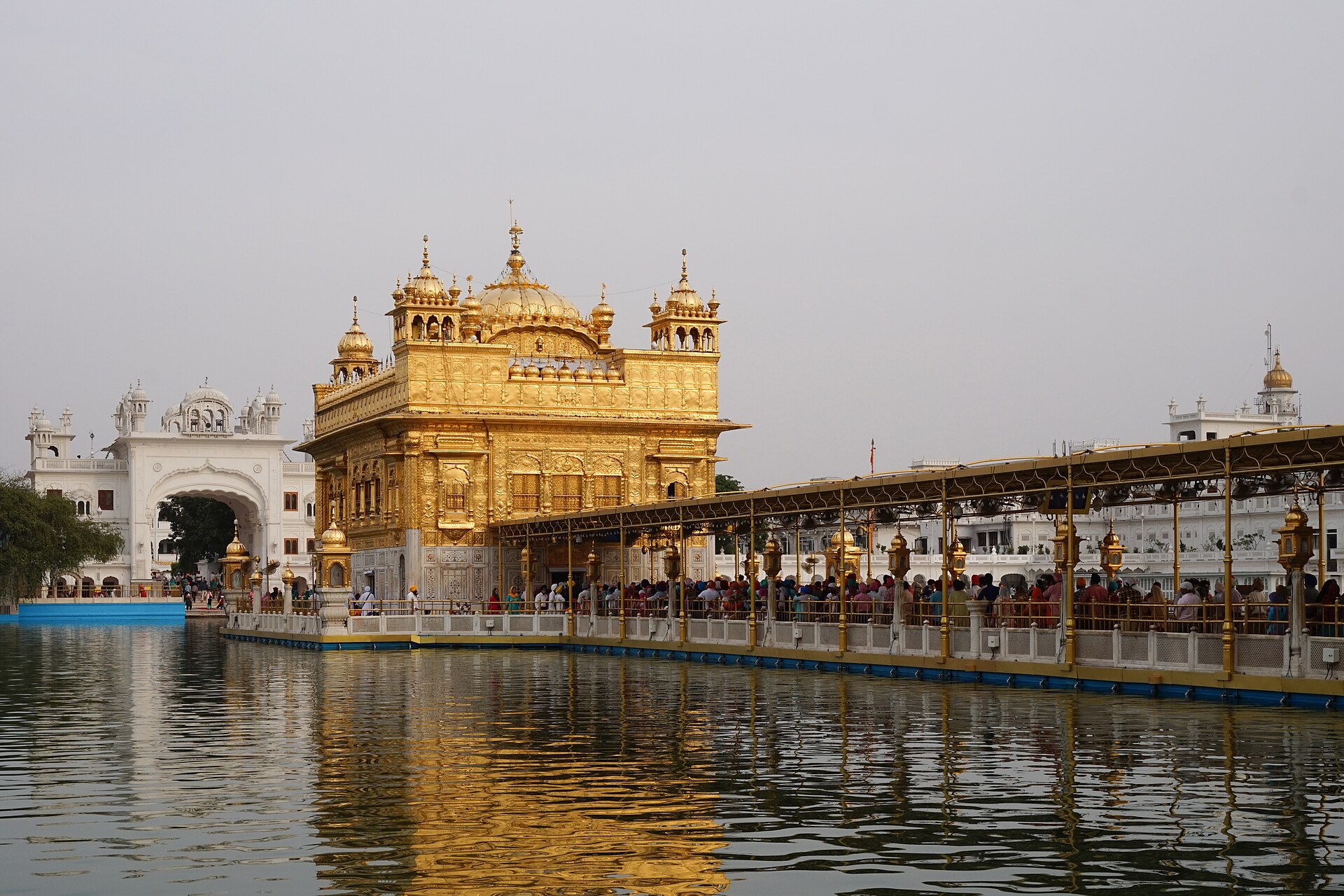
Guru Hargobind — two swords.
He came to the seat at eleven, days after his father was tortured to death, and wore two swords to the ceremony: miri for worldly authority, piri for spiritual. Then he built the Akal Takht directly opposite the Harmandir Sahib, and the community has been arguing about the relationship between those two buildings ever since.
The two swords are the hinge of Sikh history. Hargobind was eleven when his father Guru Arjan was tortured to death in Lahore, and he responded by militarising a devotional community: he wore miri and piri, kept horses and a standing guard, and built the Akal Takht — the throne of the timeless — facing the Harmandir Sahib across the causeway. The architecture states the doctrine: the temple is lower than the surrounding ground and you walk down into it, while the Takht is raised. Sikhs read this as spiritual and temporal authority held together and answerable to each other. In modern practice the relationship is contested in a very different way, since the Akal Takht's jathedar is appointed by the SGPC, which is controlled by whichever party wins its elections — so the seat that was meant to check worldly power is now embedded in it.
The same ground, other faiths
claims that share this one's ideasSign in to open the first thread. Everything here is attributed.