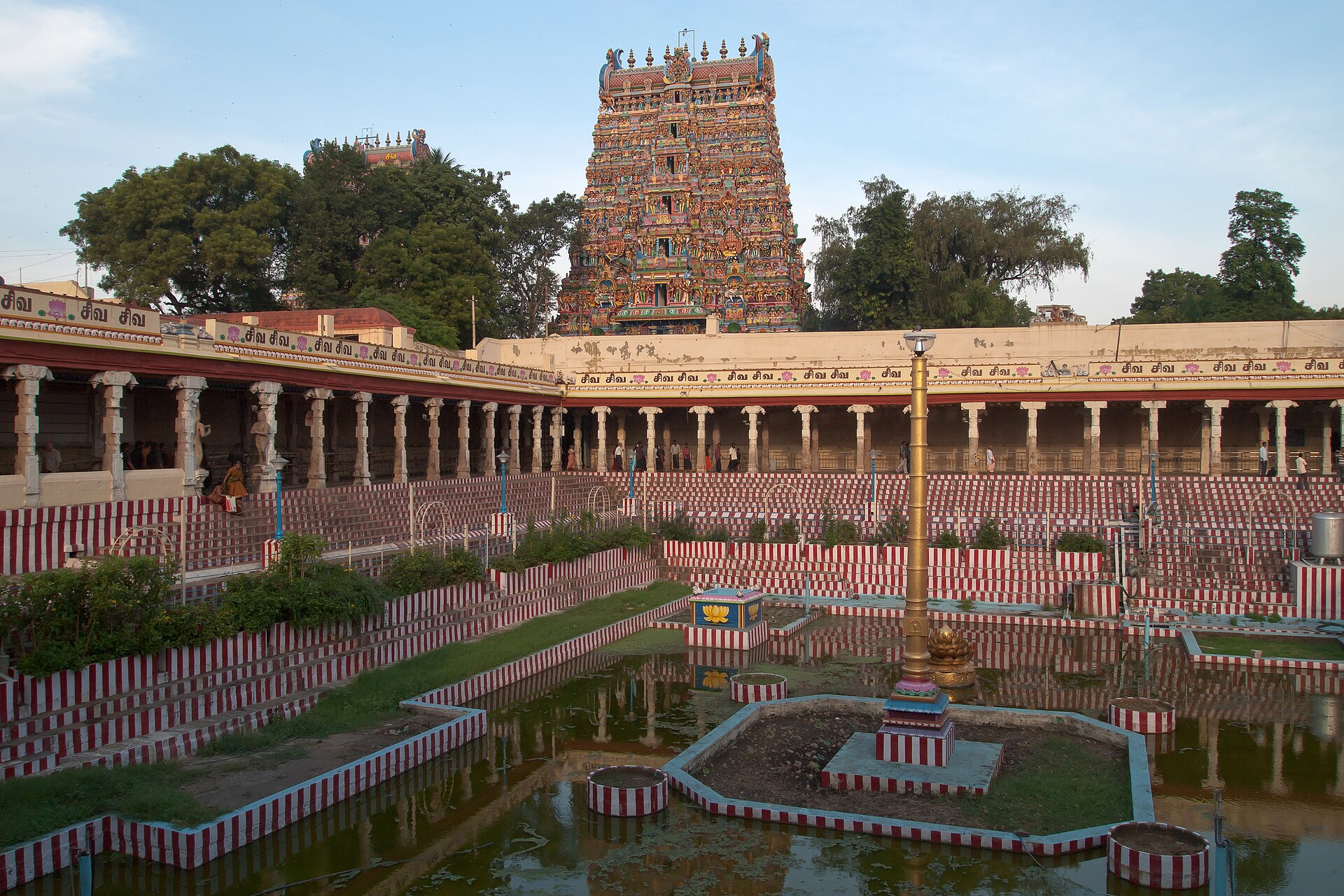
The Alvars and the Nayanars.
Poets who sang their way from temple to temple in Tamil and made devotion a mass movement centuries before the north had one. Among the sixty-three Nayanars are a potter, a hunter, a washerman and an untouchable — the list is an argument, and it was meant as one.
The Tamil bhakti saints changed Indian religion. From roughly the sixth century the Nayanars sang to Shiva and the Alvars to Vishnu, in Tamil, walking between temples, in a register of personal longing that had no real precedent — and they did it in explicit competition with Buddhism and Jainism, which they largely displaced in the Tamil country. Their compositions were later gathered into canons ranked alongside Sanskrit scripture, which is a remarkable act: the Divya Prabandham is called the Tamil Veda and is chanted before the deity in Srivaishnava temples. The social composition of the lists is deliberate. Nandanar, a Nayanar, was an untouchable agricultural labourer barred from the temple at Chidambaram; Tiruppan Alvar was carried into the Srirangam sanctum on a brahmin's shoulders because his feet could not touch the ground. Both stories are told as triumphs of devotion over caste, and Dalit critics have pointed out, reasonably, that both also end with the saint being burned or absorbed rather than admitted as he was.
Those who take refuge in me, even if born of low birth — women, vaishyas, shudras — even they reach the highest goal.
Bhagavad Gita 9.32 (rendered)Bhakti movements read this as the door opening. Critics read the list it opens the door to.
The same ground, other faiths
claims that share this one's ideasSign in to open the first thread. Everything here is attributed.