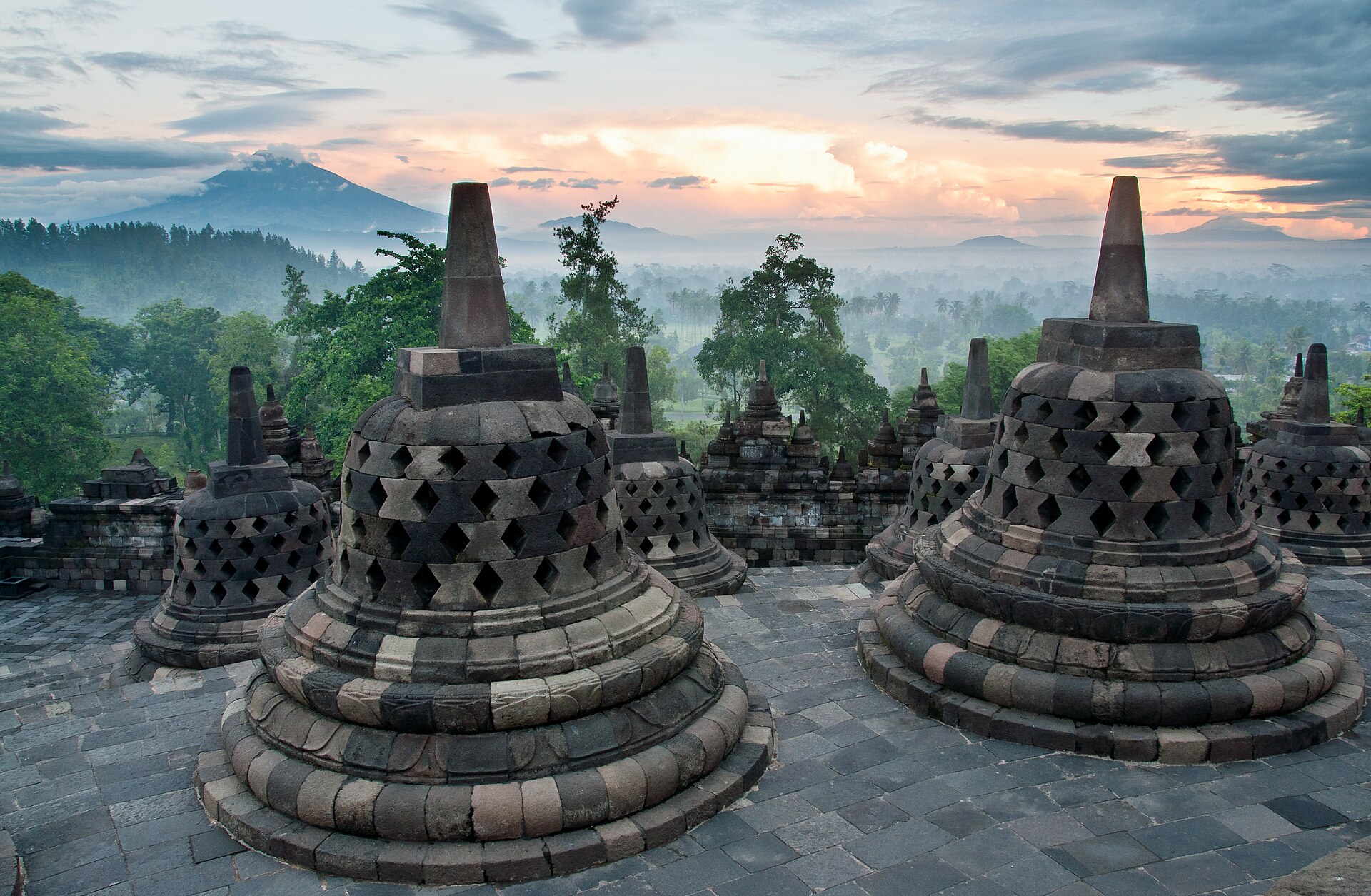
Borobudur at sunrise · Justine Hong · CC BY 2.0

Buddhism

Tradition·Founded c. 480 BCE·est. ~500 million worldwide

Vedic Religion → Buddhism → 3 branches

Branch
M Figure of Buddhism

Mara.

The tempter who tried to talk the Buddha out of awakening — read across the tradition as death, distraction, and the mind's own resistance, personified.

DomainDeath, distraction, the mind's own resistance
Depicted asArmies and daughters arrayed against the seat of awakening
StandingNamed in order to be seen through, not feared
Understanding it — context, not catechism: how this passage is held

Mara is not a devil and rules no hell: he is the personification of what keeps beings in the cycle — craving, distraction, fear, and death itself. He appears at the awakening with armies and daughters, and appears again throughout the Buddha's life, often just as a voice suggesting an easier path. The important detail is what the Buddha does: he says "I see you, Mara," and the recognition is the defeat. In Buddhist psychology, the opposing force is not evil to be fought but confusion to be seen through.

From the sources — the passages this rests on; concise renderings, cited

I see you, Mara.

Attributed across the Mara suttas (rendered)

The whole method: recognition, not combat.

The same ground, other faiths

claims that share this one's ideas
Time is a wheel, and this is the worst quarter of it. Hinduism · core tenet Go deeper →
Time is a wheel with no beginning. Jainism · core tenet Go deeper →
Zhuangzi dreams the butterfly. Taoism · story Read it in full →
Ise, rebuilt every twenty years. Shinto · rite Go deeper →
O Oya. Yoruba Religion Meet them →
B Baron Samedi — death, laughing. Haitian Vodou Meet them →

The conversation

argument stays attached to the claim it is about All discussion →

Sign in to open the first thread. Everything here is attributed.

Built on Hatchable