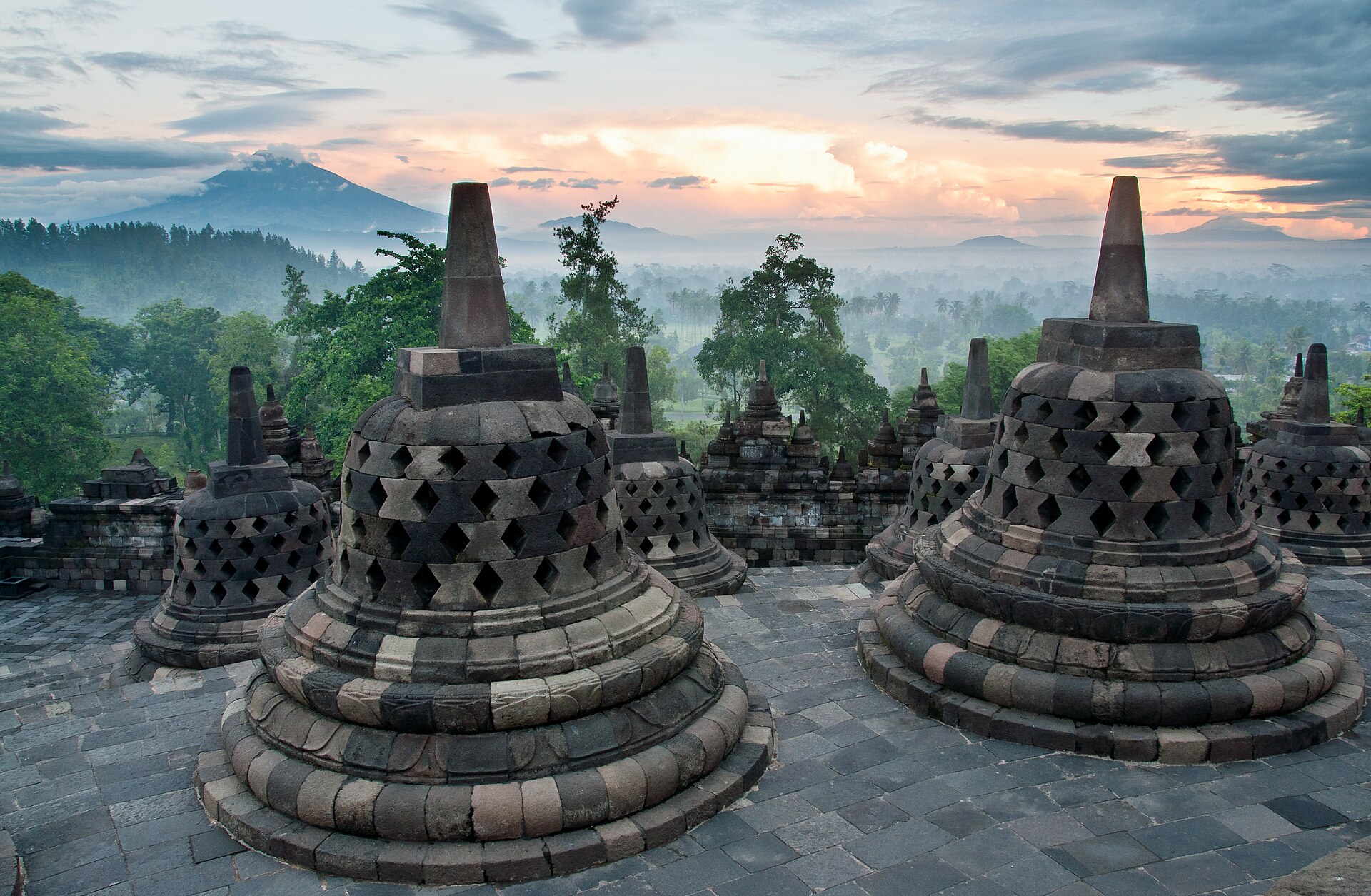
Borobudur at sunrise · Justine Hong · CC BY 2.0

Buddhism

Tradition·Founded c. 480 BCE·est. ~500 million worldwide

Vedic Religion → Buddhism → 3 branches

Branch
P Figure of Buddhism

Padmasambhava — the second buddha.

The tantric master who, the story goes, met the demons of Tibet and put them to work — then hid teachings in rocks and in minds for later centuries to dig out.

Names & titlesPadmasambhava — Guru Rinpoche, Pema Jungne
DomainTantra, exorcism, and teachings hidden for later ages
RelationsYeshe Tsogyal, his student and consort, wrote them down and hid them
Depicted asLotus-born, wide-eyed, moustached, a trident at his shoulder
StandingCalled the second Buddha across the Himalaya, and meant literally
Understanding it — context, not catechism: how this passage is held

Padmasambhava is where Buddhism arrived in Tibet and did not so much replace the existing religion as recruit it. The traditional account has him subduing the local mountain gods and demons one by one and binding them by oath to protect the dharma instead — which is a fair description of what actually happened to Tibetan religion. The Nyingma school traces itself to him and to the terma system he is said to have established: teachings hidden in caves, lakes, and in the mind-streams of future practitioners, to be found when the age is ready for them. It is an institutional mechanism for legitimate innovation, and it is still in use.

The same ground, other faiths

claims that share this one's ideas
The tariqa. Islam · community Go deeper →
Empowerment (abhisheka). Vajrayāna · rite Go deeper →
The tariqa. Sufism · community Go deeper →
The Seal of the Unity of the Three. Taoism · scripture Open the book →
T The Masters of Sirius. The Order of the Solar Temple Meet them →
Sound rightly spoken has power. Vedic Religion · core tenet Go deeper →

The conversation

argument stays attached to the claim it is about All discussion →

Sign in to open the first thread. Everything here is attributed.

Built on Hatchable