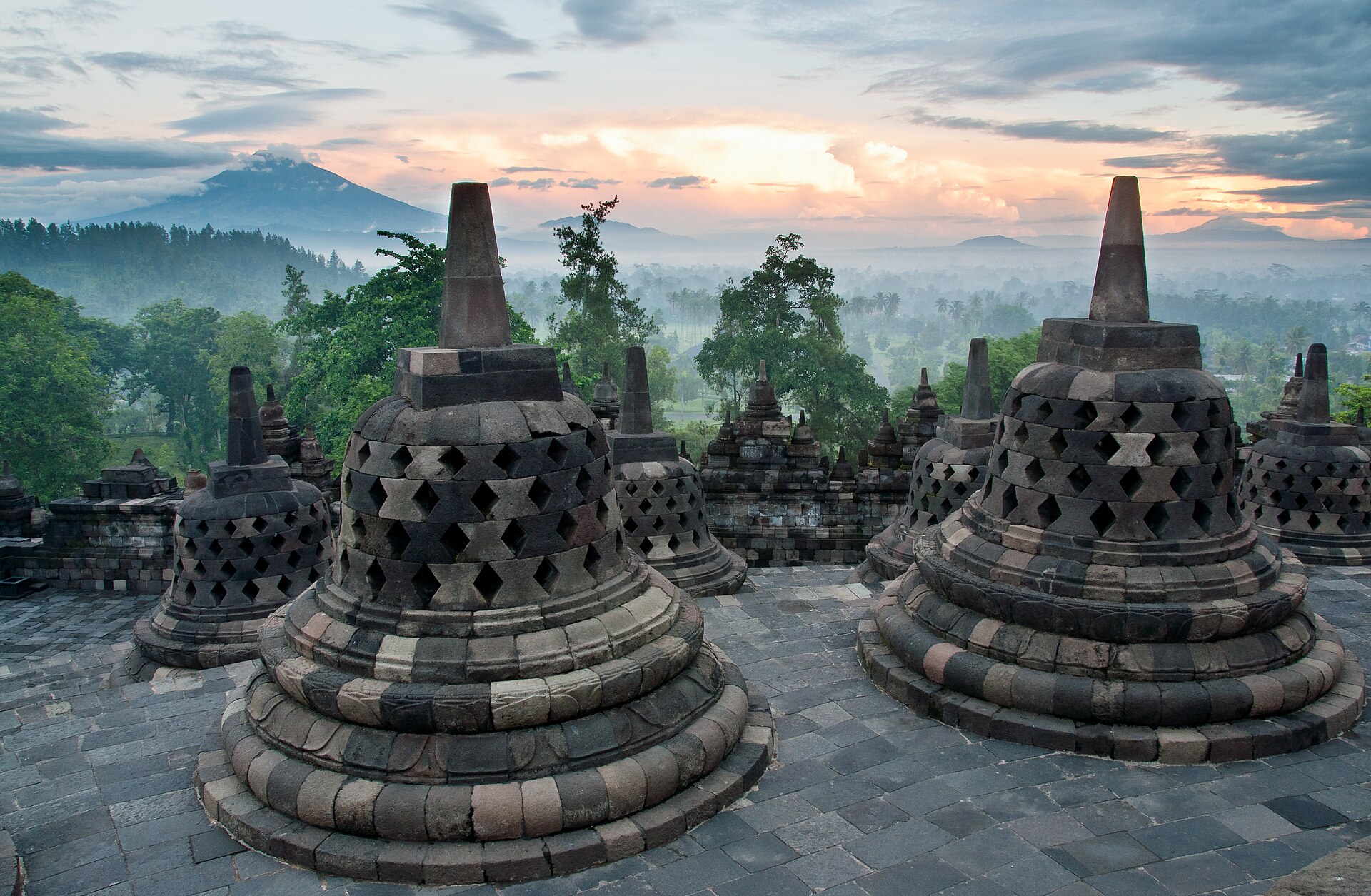
Borobudur at sunrise · Justine Hong · CC BY 2.0

Buddhism

Tradition·Founded c. 480 BCE·est. ~500 million worldwide

Vedic Religion → Buddhism → 3 branches

Branch
T Figure of Buddhism

The Medicine Buddha.

Twelve vows, all about healing, made lapis-blue and given a jar. Buddhism admitting out loud that people want their bodies fixed as well as their minds.

Names & titlesBhaisajyaguru — Yakushi Nyorai, Sangye Menla
DomainHealing — of the body, and of the sickness underneath it
RelationsPresides over a pure land in the east, as Amitabha does in the west
Depicted asDeep lapis blue, a bowl of medicinal myrobalan in his palm
StandingChanted over the sick from Tokyo to Ladakh; twelve vows, all of them about relief
Understanding it — context, not catechism: how this passage is held

The Medicine Buddha is where Buddhism stops pretending its adherents only want liberation. His twelve vows are unusually concrete — that the sick be healed, the deformed made whole, the hungry fed, the imprisoned released — and his practice is straightforwardly petitionary. Tibetan medicine treats him as its source, and the lapis-blue colour is doctrinal rather than decorative: it is the colour of the healing itself. Modern practitioners chant his mantra at hospital beds, and teachers generally decline to over-explain whether the mechanism is supernatural or psychological.

The same ground, other faiths

claims that share this one's ideas
T The yakshis. Jainism Meet them →
Guard the tongue. Judaism · precept Go deeper →
Love of God and neighbor is the whole law. Christianity · core tenet Go deeper →
K Khadija — who believed first. Islam Meet them →
Remember the Name. Sikhism · core tenet Go deeper →

The conversation

argument stays attached to the claim it is about All discussion →

Sign in to open the first thread. Everything here is attributed.

Built on Hatchable