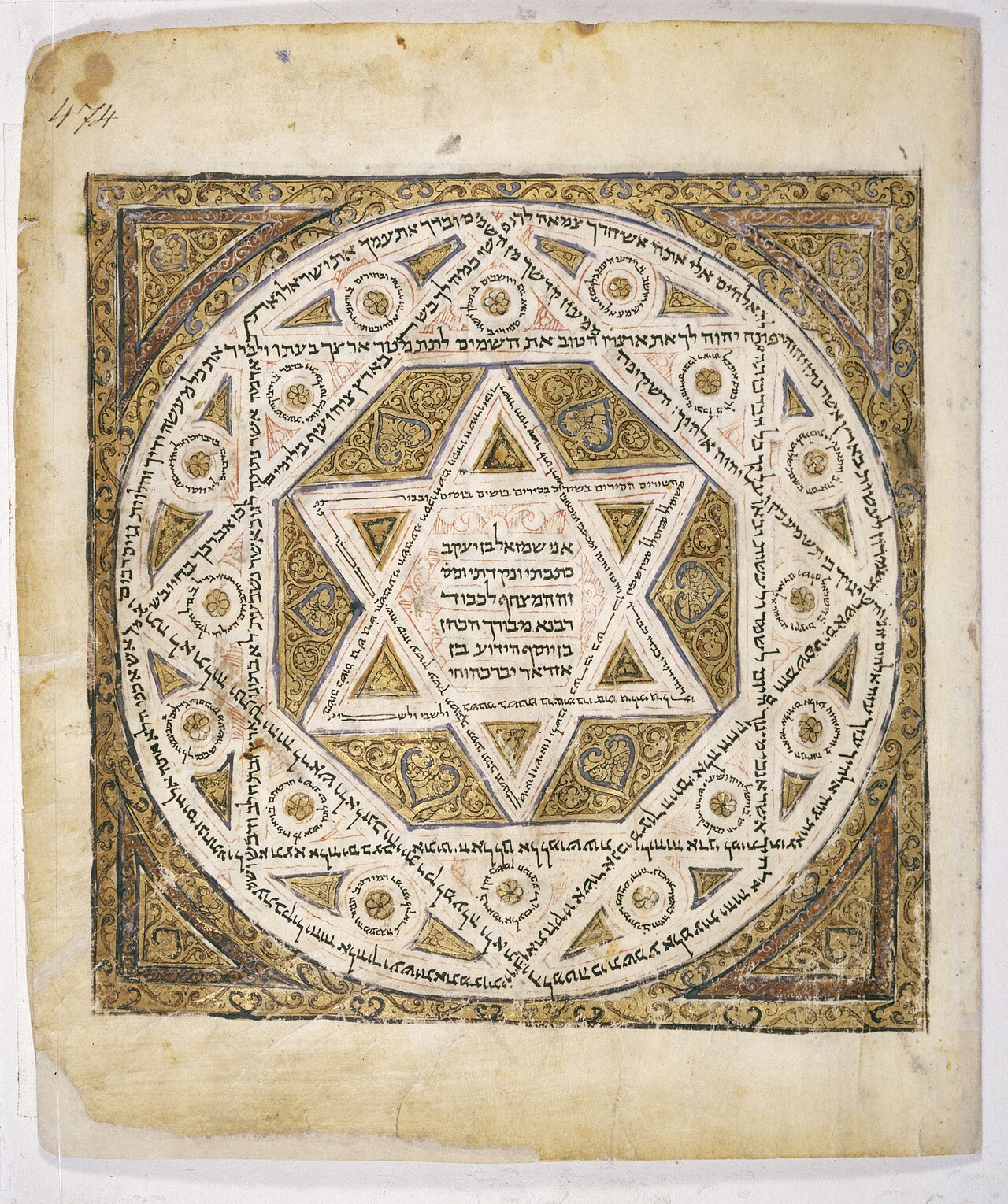
The matriarchs — Sarah, Rebecca, Rachel, Leah.
Jeremiah has Rachel weeping for her children and refusing comfort, and God answers her rather than any of the fathers. Whether she is named in the standing prayer is now the fastest way to identify which synagogue you have walked into.
The matriarchs are not a modern addition to the tradition; their presence in the liturgy is. Genesis gives them agency the surrounding literature does not — Sarah demands Hagar's expulsion and God tells Abraham to listen to her, Rebecca receives the oracle about her sons directly and acts on it, Rachel steals her father's household gods and sits on them. Descent runs through them: the Mishnah's rule that a Jew is the child of a Jewish mother makes the female line the one that transmits the covenant, whatever else the structure looked like. Rachel's tomb on the Bethlehem road has been a women's pilgrimage site for centuries, visited for fertility and for safe birth, and is now inside a fortified compound reached by an armoured bus. The liturgical question — whether the Amidah opens God of Abraham, Isaac and Jacob, or adds Sarah, Rebecca, Rachel and Leah — was settled differently by each movement between 1975 and 1990 and functions now as a denominational passport.
The same ground, other faiths
claims that share this one's ideasSign in to open the first thread. Everything here is attributed.