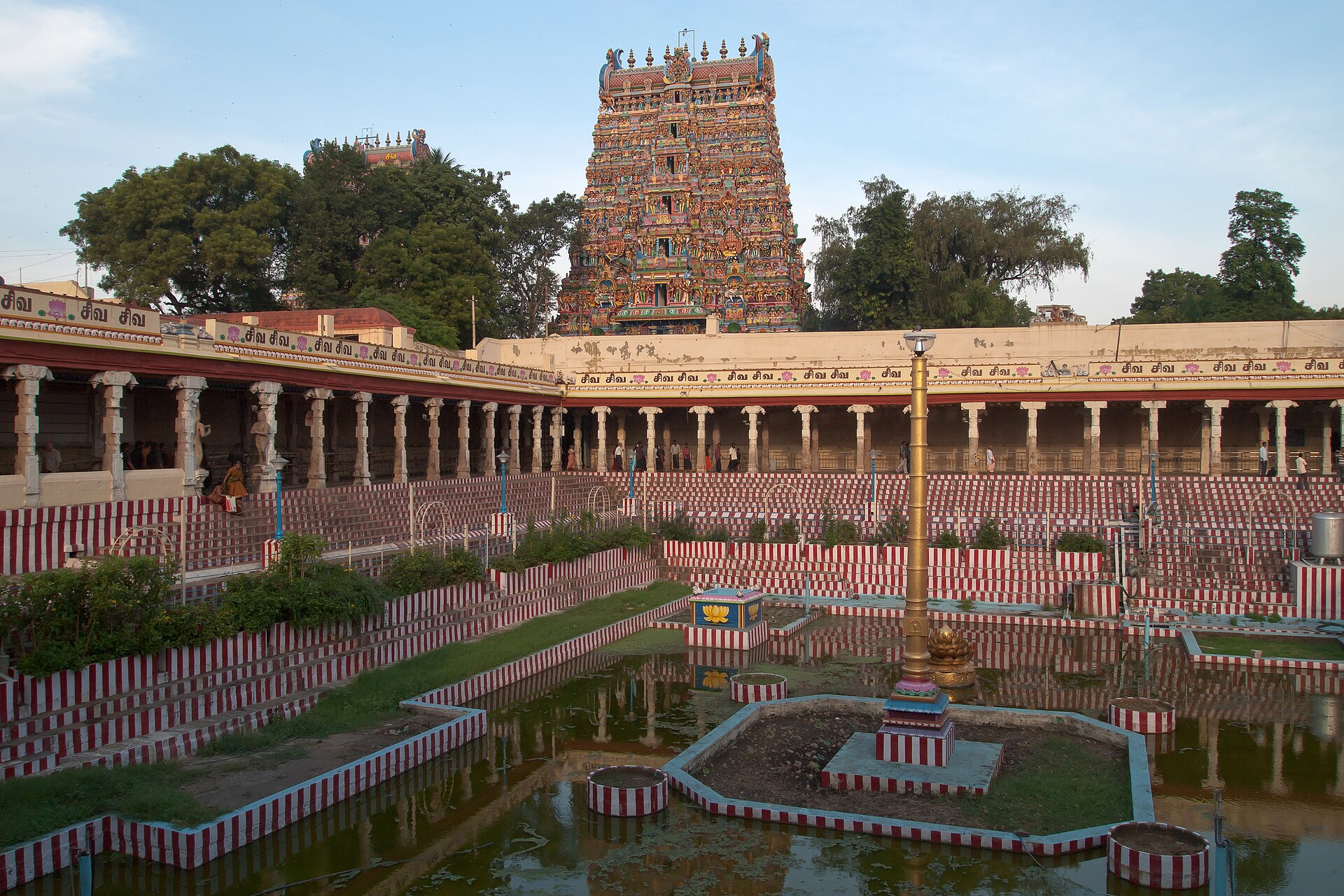
Murugan — the god who stayed south.
A war-god who faded in the north and in Tamil country merged with the ancient hill god Seyon to become the god of the language itself. At Thaipusam his devotees carry kavadi up his hills with skewers through their cheeks, from Palani to Batu Caves.
Murugan is the clearest case of the Sanskrit and Tamil layers of Hinduism being visibly welded together. Skanda-Kartikeya is a north Indian war god, son of Shiva, born to kill a demon no other god could. Seyon, the red one, is a Tamil hill deity attested in Sangam poetry before that identification was made, associated with the kurinji landscape and with ecstatic possession dance. What resulted is a god whose worship is organised by the Arupadai Veedu, six war-camps or abodes across Tamil Nadu, and who is claimed as the special deity of the Tamil language. Thaipusam, with its kavadi burdens and body piercings, is one of the largest Hindu festivals outside India — Batu Caves in Malaysia draws well over a million — and is a diaspora identity marker as much as a rite. Tamil political movements have periodically tried to claim him as a non-Brahminical, distinctively Tamil god against a Sanskritic pantheon, with mixed success.
The same ground, other faiths
claims that share this one's ideasSign in to open the first thread. Everything here is attributed.