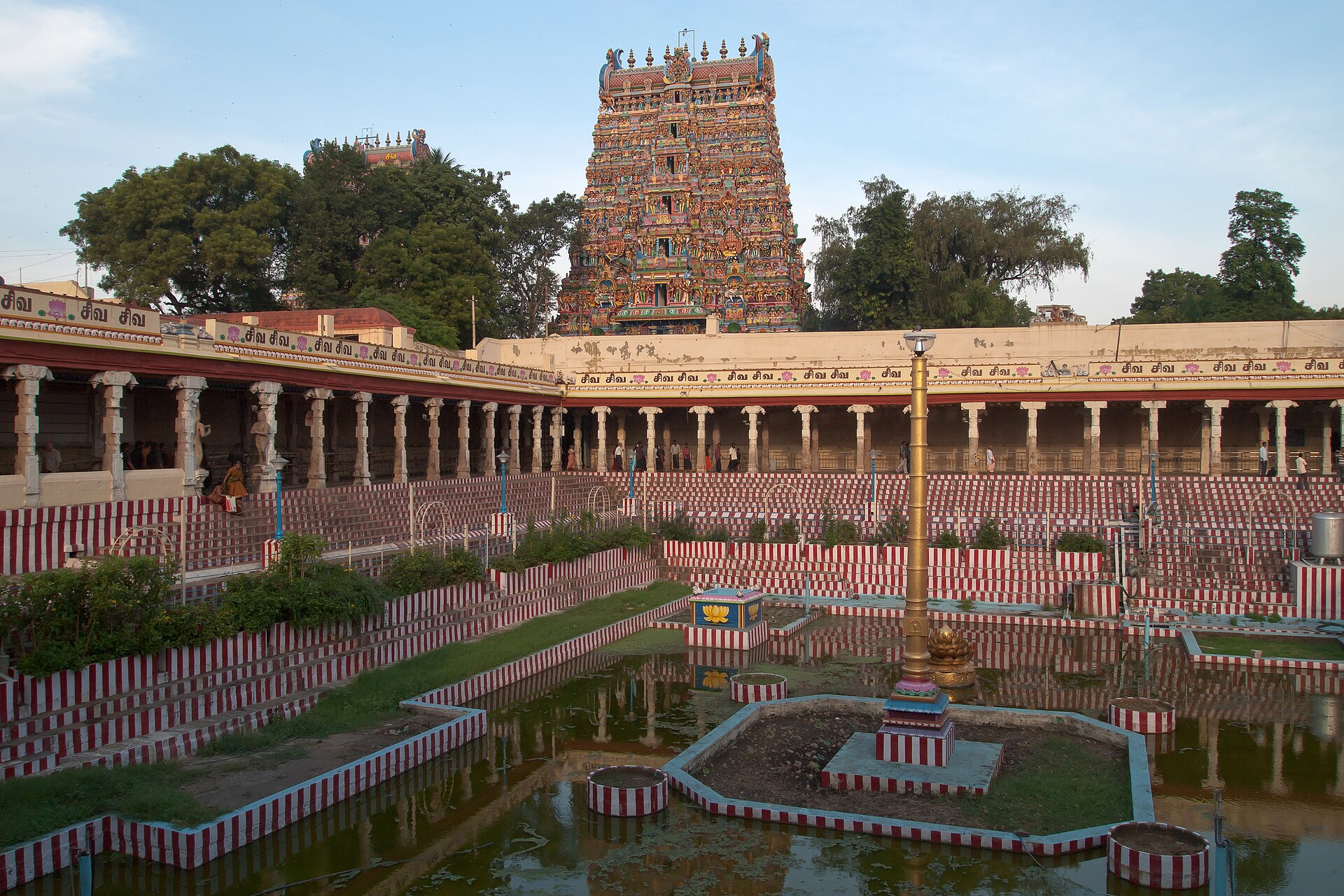
The family deity, and the goddess at the edge of the village.
Weddings pause so the couple can be taken to the kuladevata's shrine, sometimes several hundred miles away. The village goddess — Mariamman, Sitala, Renuka, Yellamma — handles fever, rain and disputes, is often served by a non-Brahmin priest, and is the layer of the religion Sanskrit texts barely mention and most Hindus never leave.
This is the answer to the gods question, and it is almost always missing from English accounts. Above the level of the great deities and below the level of philosophy sits the layer where most Hindu religious life actually happens: the kuladevata inherited with the family, whose shrine a wedding party will travel to; the ishta-devata, the deity an individual chooses and keeps; and the gramadevata, usually a goddess, who belongs to a place rather than a lineage and whose concerns are epidemic, rainfall, fertility, and justice between neighbours. These goddesses are often served by non-Brahmin priests, often receive animal sacrifice where the great temples do not, and often speak through a possessed medium rather than through a text. Sanskritisation — the process by which such a deity acquires a Sanskrit name, a Purana, a vegetarian diet and a Brahmin priest — has been running for centuries and is still running. A great deal of what gets called folk religion in colonial-era writing is simply the religion.
The same ground, other faiths
claims that share this one's ideasSign in to open the first thread. Everything here is attributed.