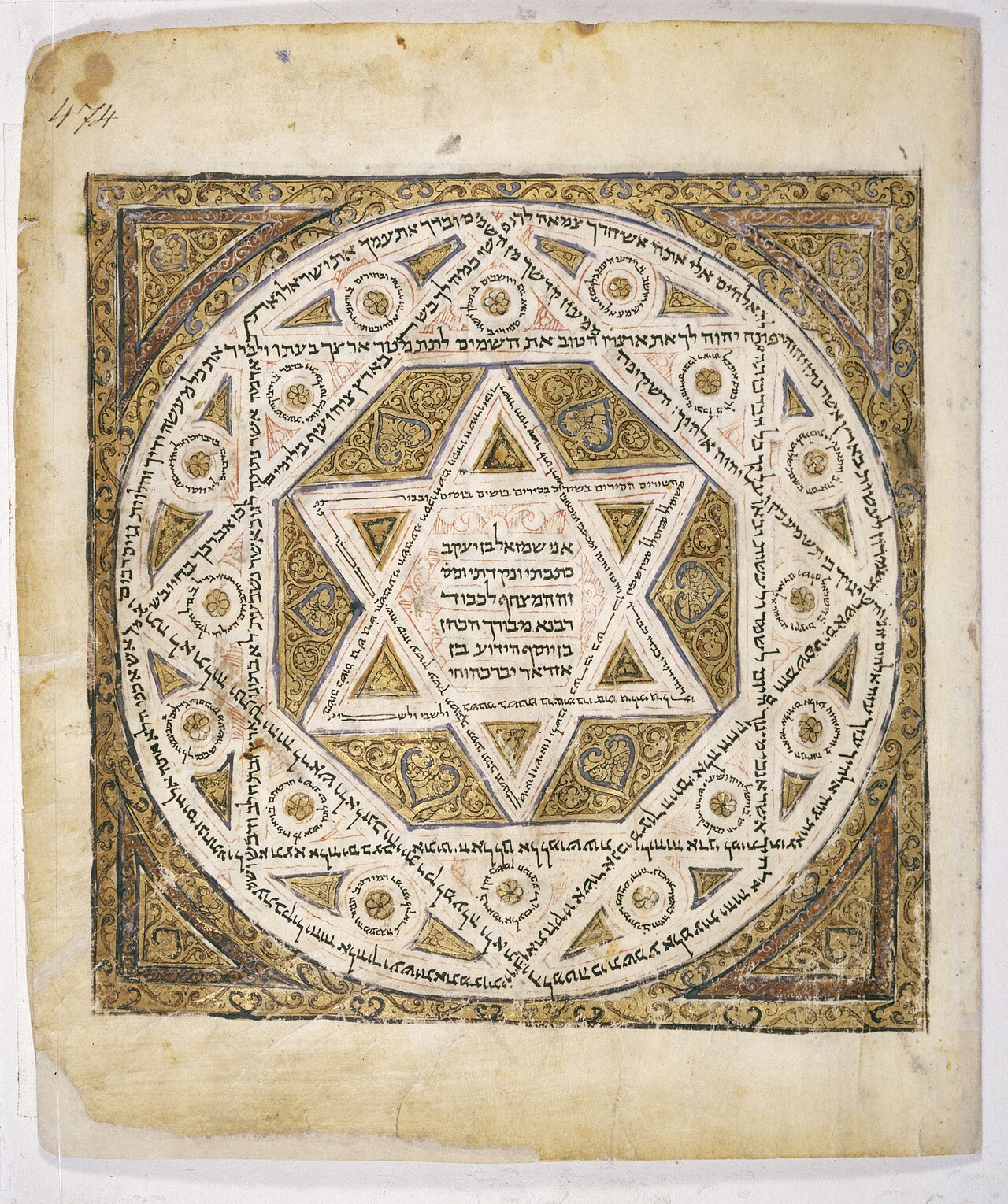
Leningrad Codex carpet page, 1010 CE · public domain

Judaism

Tradition·Founded c. 1000 BCE·est. ~15 million worldwide

Judaism → 8 branches

Branch
A Figure of Judaism

Abraham — the one who went.

Told to leave everything on a promise, he went. Three faiths trace themselves to that obedience; Judaism calls him simply our father.

Names & titlesAbraham — Avraham Avinu, our father
DomainThe first to answer; the covenant's human signature
RelationsHusband of Sarah, father of Isaac and Ishmael — three faiths call him father
Depicted asAn old man leaving Ur with everything on a promise
StandingThe founder as follower: his greatness is that he went
Understanding it — context, not catechism: how this passage is held

Abraham's greatness in Jewish reading is not belief but movement: he is told to go, and he goes. The tradition adds the story of him smashing his father's idols — not in the Bible, a midrash — to explain why he was chosen, and it also preserves him arguing God down over Sodom, which establishes that covenant includes the right to protest. He is called our father by Jews, honored as the first Muslim in submission by Islam, and cited by Paul as the model of faith before law; three traditions read the same man differently.

From the sources — the passages this rests on; concise renderings, cited

Go forth from your land, your birthplace, your father's house, to the land that I will show you.

Genesis 12:1

The call: no map, no proof — a promise and a direction.

The same ground, other faiths

claims that share this one's ideas
I Ibrahim — the friend of God. Islam Meet them →
God is one being in three persons. Christianity · core tenet Go deeper →
God is one, beyond form. Sikhism · core tenet Go deeper →
Continuity is the argument. Orthodox Judaism · core tenet Go deeper →

The conversation

argument stays attached to the claim it is about All discussion →

Sign in to open the first thread. Everything here is attributed.

Built on Hatchable