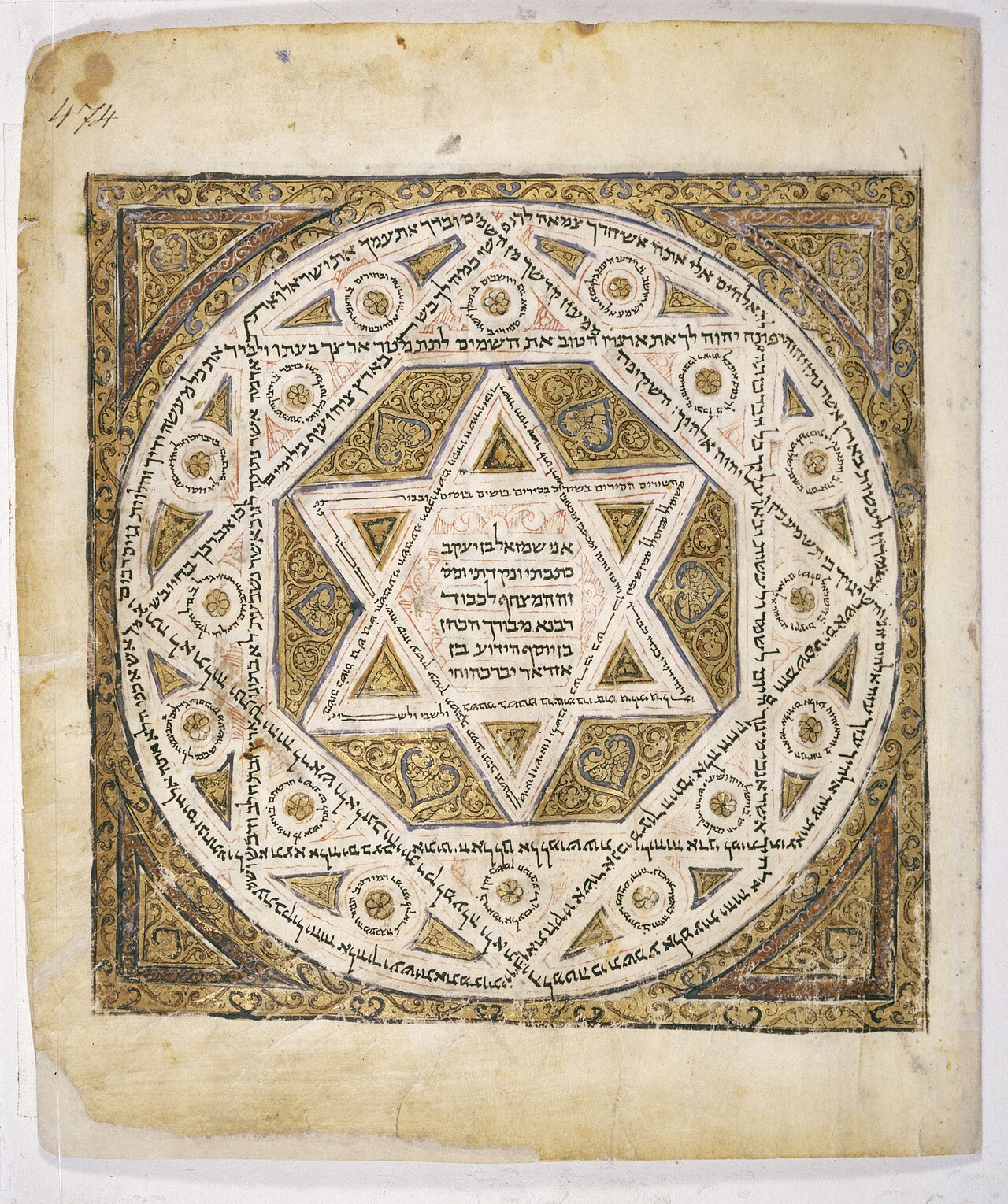
Maimonides — the Rambam.
He compressed the entire law into fourteen books, including the laws of sacrifice and the Temple that had no application, because he wrote for a world that would be restored. The thirteen principles he set out are sung at the end of Friday night services by people who would not have passed his examination.
Maimonides is the most influential Jew since the biblical period and was condemned by other Jews within his own century. Working as a physician in Cairo, he produced the Mishneh Torah, the only complete code of Jewish law ever written by one person, in clear Hebrew and without citing a single source — a decision meant to let an ordinary person look up the law and stop, and one that infuriated the scholarly establishment, who read it as an attempt to make the Talmud unnecessary. The Guide for the Perplexed, written in Judeo-Arabic for readers caught between Aristotle and scripture, argues that God has no attributes that can be positively stated and that prophecy is a natural human perfection. Both books were burned by Jews in Provence in the 1230s at the height of the Maimonidean controversy. Yemenite Jews preserved his code as living law and his manuscripts as the best surviving texts; Ashkenazi Judaism absorbed his conclusions and largely ignored his philosophy. His thirteen principles, versified as Yigdal, are sung by congregations who have never asked what they commit to.
The same ground, other faiths
claims that share this one's ideasSign in to open the first thread. Everything here is attributed.