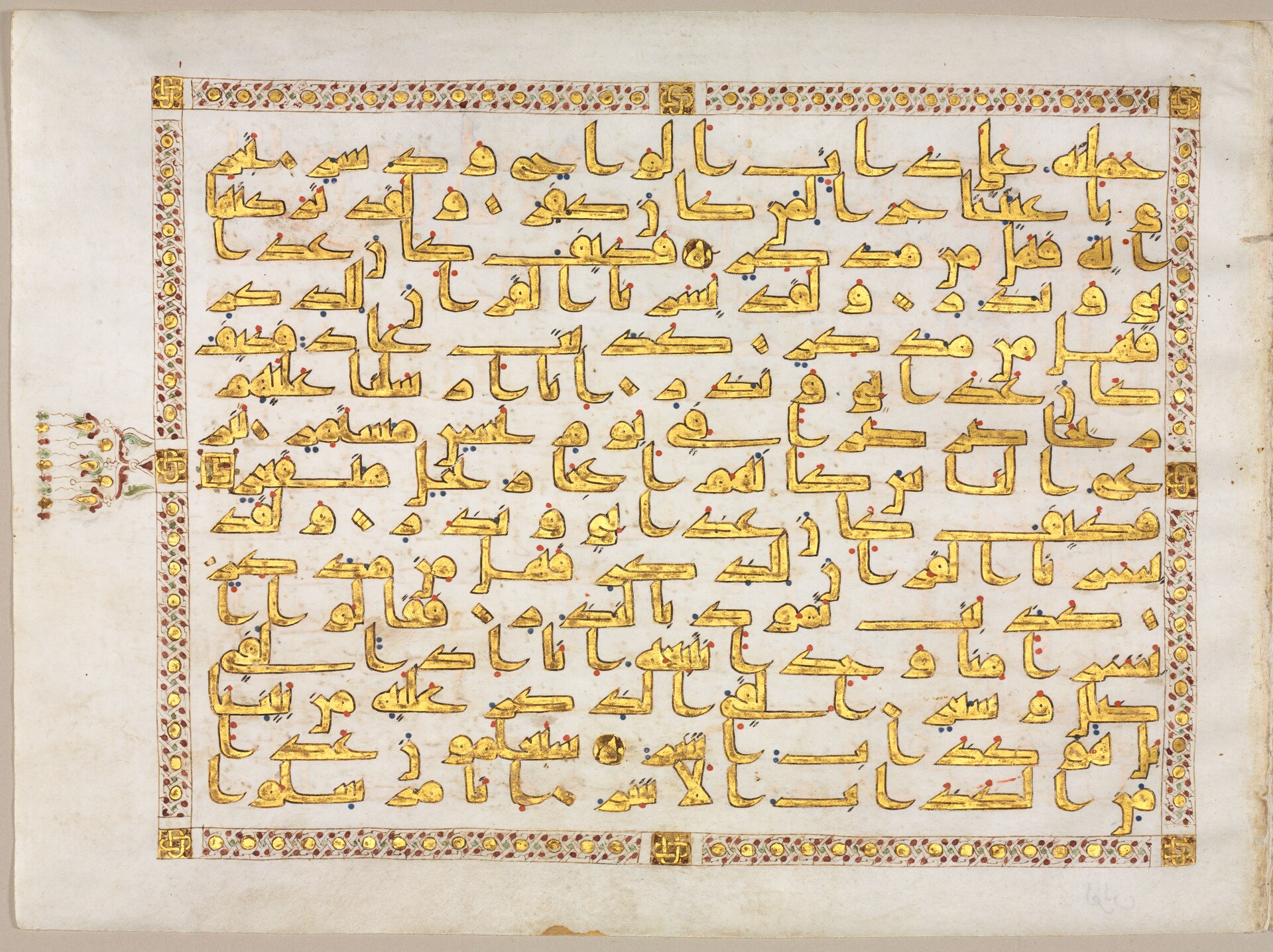
The prophets — one message, many mouths.
Twenty-five are named in the Quran and a hadith puts the total at a hundred and twenty-four thousand, most of them unrecorded. The Quran retells Nuh, Ibrahim, Yusuf, Musa and Isa as Muslims before Islam existed: same message, different peoples, different centuries.
Islam's prophetology is the mechanism by which it claims the other traditions rather than opposing them: the message is always the same and the messengers are local. Rejecting a prophet is treated as rejecting the whole line, which is why insulting Musa or Isa is as serious as insulting Muhammad. The Quran retells the stories in a distinctly non-narrative way — allusive, out of order, assuming the audience knows the plot — which is why the tafsir literature ended up importing so much detail from Jewish and Christian sources under the label isra'iliyyat, and why later scholars grew nervous about it. Prophets in Islam are protected from major sin, a doctrine called isma, which forced commentators to reread the biblical episodes where they behave badly. Dawud's affair with Bathsheba, for instance, is not in the Quran and is rejected by most Muslim commentators.
The same ground, other faiths
claims that share this one's ideasSign in to open the first thread. Everything here is attributed.