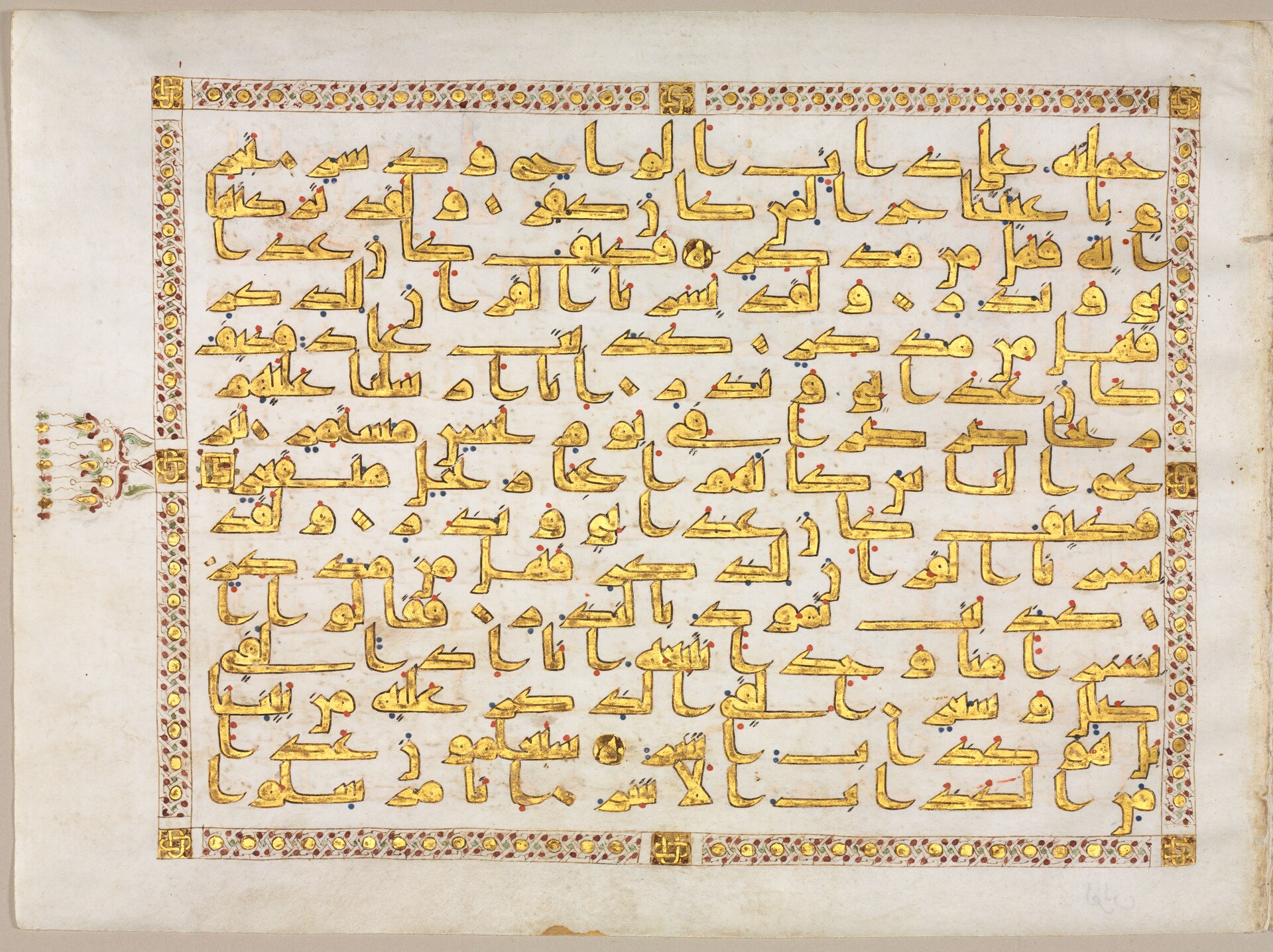
Bilal — the first voice.
An enslaved Abyssinian, pinned under a rock on the hot sand for saying ahad — one — and bought and freed by Abu Bakr. The Prophet made him the first muezzin, and sent him up onto the roof of the Kaaba to call the prayer over a city that had owned him.
Bilal is the story Islam tells about itself when it wants to talk about rank, and it is told constantly. The details are concrete: enslaved by Umayya ibn Khalaf, laid out under a boulder in the midday heat of Mecca and repeating one word, freed by Abu Bakr, and then given the one job in the new community that everybody hears. When Umar drew up the register of stipends he is reported to have called Abu Bakr our master, and the man our master freed. The tradition also preserves the objection — that his Arabic was imperfect, that he pronounced the shin as a sin — and the Prophet's dismissal of it, which is arguably the more useful half of the story. Black Muslim communities in the United States adopted the name Bilalian in the 1970s for precisely this reason. It should be said plainly that the story coexists with a long and unfinished history of anti-Black racism in Muslim societies, which is what makes it get told so often.
The same ground, other faiths
claims that share this one's ideasSign in to open the first thread. Everything here is attributed.